Write On Blog

Two Activists, One Dialogue: a letter exchange between Max Hope and Jo McAndrews

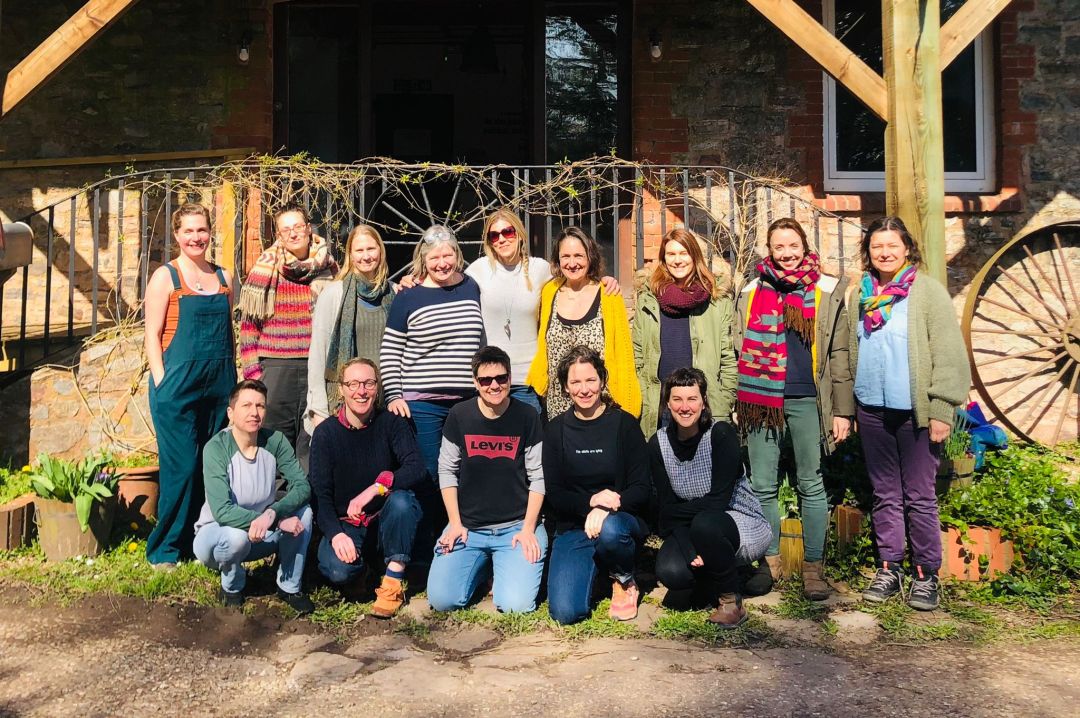
Max Hope and Jo McAndrews met for the first time in March 2022 during a Soul Fire writing retreat in Devon. It was one of those occasions when we wondered how it was possible that we had never met before. Strange but true. We talked, laughed, and ate apple crumble in a mug. Since this, we have spent more time talking and thinking about writing, through online and in-person writing retreats, and in Jan 2025, we committed to undertaking ‘Write for Life’, a six-week programme designed to support people in their writing practices. This dialogue has emerged from our experiences together with Write for Life.

Max and Jo are both activists and changemakers, with shared interests in children’s rights, inclusion, the climate crisis, and deepening our connections with the natural world.

We agreed to have an email exchange on the loose themes of writing, writing as activism, writing as healing, and all things related to writing. Each of us was to write a response to the provocation of the other, and we would end our section with a question or prompt, and this would then go back to the other. A writerly version of ping pong.

There were no rules at all. Liberating, but where would we end up?

What follows is our entire dialogue, unfolding as it happened, and unedited apart form small grammar and typos.

We welcome any responses that readers might wish to make to help us open out and expand our dialogue.

Max:

We both like writing. Well, maybe ‘like’ isn’t the right word. I’ll rephrase. We both write. Maybe for different reasons, and in different ways, but I like to think that writing is a common interest for us both, especially writing as a form of activism.

There is a point to our writing. We are writing for a purpose. To make an argument, to tell a story, to share some information. Maybe we also write for ourselves, to help us think, to help us process, possibly even for healing.

I’d love to explore this with you.

I wrote a blog post last week that got re-shared over 300 times, and it seemed to make some waves. Many people resonated with it and either commented directly or used the ‘heart emoji’. Others used the ‘angry face’ emoji, and I even got trolled for the first time in my life. For me, in a strange way, this was a sign of success. Clearly, my writing had gone beyond my smallish circle of Facebook friends and was getting into places that I do not ordinarily access. This was a vastly different experience to when I have published academic articles, or even when I have published books. These didn’t get such immediate feedback. Well, to be honest, they didn’t get much feedback at all, and I am left guessing as to how many people read them, or what they thought of them. That’s a major problem with academic writing. It either doesn’t get read at all, or even if it does, the author never knows about it.

I write for many reasons, and only some of my writing ever makes it into the public domain. Some is just for me. Hum, now I think about it, maybe most of it is just for me.

Jo, I’d love to know why you write. Can you share anything about that to get us started?

Jo:

Well, thank you for the invitation. I have had a writing drought and this has coaxed me back into it. I love this relational writing approach. It really helps me to know that someone is going to read what I am writing, and have a response. There is so much I could respond to in what you have written, and so much that rises up of my own experience.

You ask why I write? What a simple and complex question. I write because I have a huge web of thoughts, knowledge and ideas that I am desperate to share with the world. I have this low level feeling that if only I could write it all down then I will change the world. I feel burdened with responsibility to get it all out there because it all makes so much sense to me and I think the world hasn’t caught on yet. Yes, I am aware of how arrogant that sounds! When I read a book that I wish I had written I get quite jealous and despairing, but part of me is also hugely relieved that someone has managed to get it out there and now I don’t have to say it.

I don’t think I really enjoy writing most of the time. When I sit down to write I am immediately accosted by clamours of self-doubt and urgency. It is so hard to choose where to start and my pen or keyboard cannot keep up with my brain. I have to force myself to keep writing and just withstand the inner turmoil about it.

For decades I have wanted to write but have believed myself to be hopeless at it. Finding out a few years ago that I have ADHD has revolutionised my writing. I now understand why I find it so hard, and it is nothing to do with my ability to string words together or to express complex ideas. It has allowed me to find strategies that work for my brain that don’t need me to be a different person.

What I do enjoy, is the surprise of reading back what I have written and finding myself often very pleased with it. It seems I can write, and when I have the right context for it, I can find it quite easy. It is a revelation.

I think I might have been one of the first sharers of your recent, beautiful blog post. I found myself wanting to tell everyone that I know you. What a vulnerable thing though, to find that such a personal sharing has gone so far. The closest I have come to that experience was a couple of years ago when I wrote a piece at Christmas called ‘Of course there were women at the birth of Christ’. It got shared wildly all over the place. It was nothing like the stuff I usually write so it didn’t get my name into all the right places, but it was deeply affirming and encouraged me to keep writing.

So, there is a start to our conversation. Back to you Max. Do you find enjoyment in writing? What do you enjoy most?

Max:

There’s so much to talk about already. I want to know more about your experience of having ADHD and how this has changed things for you. I want to talk about your blog post about Christmas – which I loved, by the way – and push you to consider writing more things like this. But I’ll stick with the question you have asked and save the rest for later.

Do I find enjoyment in writing? That’s a good question.

I think the most accurate answer is that I don’t always find enjoyment in writing itself, but I do enjoy the fact that I have written. Does that make sense?

Recently, and mainly because of a 6-week programme called Write for Life – which we did at the same time – I have developed a daily practice of writing in 20-minute bursts. I set an alarm, and I write on whatever topic I want to write about, and I don’t stop writing until the timer goes off. It’s a helpful way of containing any anxiety that I might have about not knowing what to write, not having enough time, or about my writing not being good enough. Most of what I have been writing ends up in a file on my laptop, but some of it can be polished up a bit and used. That’s how I wrote my blog post last week. The news from the Supreme Court had come out. I’d talked to a few people about it, slept badly, and then woken up and opened the laptop. That post was finished in 20 mins, with just a bit of extra time for tweaking once I had decided that I would put it out into the public domain.

What I mean about enjoying the writing once it is done is twofold. First, I like reading back what I have written. Sometimes it’s interesting. Sometimes I write things that I didn’t even know that I thought, or I use words that I rarely use in spoken conversation. Sometimes I even think that what I’ve written is good and I feel a sense of satisfaction. But the second reason is perhaps more important, and that is that writing helps me to process things. Writing helps me to articulate what is happening at a subconscious level. It literally helps me to know what I think and what I feel, and for that reason, it’s good for my mental health and good for my nervous system.

Jo, I am struck by what you say about the burden of feeling that you have to get everything written down, and that this will help with changing the world. I am reminded of something that Liz Gilbert says in her book, Big Magic, which is that creative ideas knock on doors, and if the person at the door is unable to respond in that moment, then they move on and knock on someone else’s door. In effect, they have a life of their own. I wonder if that’s what’s happening when you read a book that you wish you could have written. You weren’t ready to respond in that moment, but someone else was. I find that comforting. It takes the pressure off.

As activists, lots of creative ideas might come knocking on our doors. There are so many things that we could do, so many things that need our drive and passion.

What role do you think that writing plays in your activism, and how do you balance the desire to write with your other forms of activism?

Jo:

Well it makes my heart sing to read that you are interested in hearing more about the things I have already written in this conversation. I love that you want to know more about my experience in the world and how I see things. That is one of the great rewards of writing for me, and one of its frustrations. The reward is to connect with people who are interested and to feel validated and witnessed. The frustration is that I can feel really hungry for that validation and want to share every word with someone so that it feels a bit pointless writing if no one else is going to read it.

Also, there is a generative thing where each idea or thought that I read or write inspires loads more things to think about and say. Already in this conversation, for example, we have touched on lots of things that deserve further and deeper exploration and it hurts something in me to have to leave them for another time, or even leave them behind all together. It is easily overwhelming for me. Another thing that makes sense through the ADHD lens.

You asked what role writing plays in my activism and how I balance it with other things. I have been thinking a lot about this and really appreciate the question and your interest. I once read something about systems change that I now can’t find. It was a model that suggested different levels of influence and how much power they had. The most influential level was the changing of hearts and minds – shaping thinking and understanding. This is where I am most inspired. All the learning I have done in my life has led me to believe that I have some really good ideas about why the world is heading in the wrong direction, what the right direction would be, and what we can do about it.

I have learned a lot of this, found many of my teachers, through what they have written. Writing allows ideas to be shared widely and to be found more easily. Sarah Peyton has been a brilliant teacher for ages I imagine, but I only found her when she got her book published and someone told me about it. I have been so inspired by the ideas of bell hooks, Alice Walker, Staci Haines, Daniel Siegel, Darcia Narvaez and so many more, and I could read them because they wrote them down!

Now that we can publish and share ideas ourselves on so many platforms, it seems over and over again to be a ‘no-brainer’ for me to write too. I want to be part of that glorious chorus of wisdom and words.

How do I balance that with other activism – well that is an interesting question. I think the balance is a bit haphazard to be honest. I find writing a bit lonely and I find self-motivation hard to find. So I am regularly getting involved in groups or projects that are working towards the change I want to be part of. The problem is, I am not very good at being in groups! And so I find I have to spend a lot of energy trying to manage my experience, not being very effective, and being disappointed again in myself and the world. I find big protests and marches really overwhelming, I don’t believe in writing to my MP anymore, and I am scared of being arrested for being disobedient.

My activism really is in offering deep care and support to parents and to young people, and in trying to change how children and young people are treated, in order to grow their ability to face the world with some hope of resilience. The balance I am looking for is between supporting individuals and changing the system for everyone. Another balance I need is between my care for others and my care for myself. It is hard to stay resourced enough to keep turning up.

There is so much more to say and I am stopping myself here for now in order to stick to our conversation format. I already have a worry that I have written too much (here is another expression of how ADHD affects me)

Thank you for reading this Max and I would love to ask you, what are the most important ideas you would like to share with the world through your writing? I mean important to you of course.

Max:

I feel resistant to your question, and I am trying to work out why this might be the case.

Hum.

In the past, I could have easily answered you. My writing was mainly about education. Critiquing the current system. Transforming it from within. Shining a light on many of the good practices that exist outside the system. Finding ways to build genuinely inclusive practices. Centring the voices of children and young people. Rewilding our theories and our practices.

My writing was a form of activism, trying to change the education world through sharing ideas, bringing persuasive arguments, sharing new data. I believed that if only people knew the truth (as I saw it), then that might catalyse change, albeit on a small scale.

I don’t think it really worked. It’s painful to admit this, but I believe it’s true.

I’m not saying that my research and my writing made no difference at all. I couldn’t possibly know that. Academic writing tends to be published and from that point on, it is released into a world of its own. Academics know that they have been well received if they hit the bestseller list (a rare occurrence) or if they are frequently cited by other authors, but in the main, it’s a deathly silence.

I now have a different approach to writing.

I write about what is interesting to me. Sometimes I put this put into the public domain – like with my recent blogging – but I try to remain unattached to any outcome. I try not to judge my writing on how many people like it, share it, or comment on it (despite what I said in the opening section of this dialogue with you). I try to retain an internal locus of evaluation, which means that I get to be the final arbiter on whether it’s good or whether it’s worthwhile.

Right now, what’s important to me is about what makes my heart pump faster. I am trying to make decision based on what excites me, and not on what I think is worthy or valuable to others. Recently, I’ve been writing about gender and sexuality, about queer nature, and about my obsession with wolves as totems of the wild. I’ve also been doing some playful writing about being queer in the 80s and 90s, and I’m exploring queer folklore. I want to write some stories, and I want to write about using stories as a tool of activism.

I’m also playing with different styles. Blog posts. Open letters. Even – dare I say it – poems.

I feel that I’ve reclaimed my identity as a writer, and I’m open to explore different styles and new ways of using my voice. It’s cool, and I’m having fun.

Jo, can we talk more about your ADHD brain? If you feel comfortable, I’d love to hear some of your insights about how this affects your writing? And also – where might your ADHD brain help you to get where you want to be?

Jo:

Well, what a great direction this has gone in! I love your resistance to my question. Your exploration of that has opened something up for me. You are shining a light for me to free myself up. It is interesting that my asking the ‘wrong’ question has turned into a deeper reflection of the purpose of writing for both of us.

I strongly resonate with the first part of what you have just said. I could have written it myself, it rings so true. I recognise the deep desire to contribute to social change, knowing that I have something very important to contribute and a deep longing for a different world. And I recognise the pain of feeling like it is not working. I have been going through a few weeks of quite intense despondency about the state of the world and our collective failure to make the changes needed.

I have been experiencing a sort of inner rebellion, like ‘Right then, I am just not doing this anymore, there is no point anyway.’ I have still been holding some plan to write it all down though – seeing myself as a wise hermit in the woods who can share my wisdom from the comfort of my reclusive hideaway.

Reading your words just now gave me a thrill! You said ‘Right now, what’s important to me is about what makes my heart pump faster.’  Wow – that is a great measure of purpose in writing. I love what you are saying about playfulness and following your interest. It sounds really freeing and creative, and I am loving the writing that you have shared recently. What a great role-model!

You asked about my ADHD brain, how it affects my writing and how it could help me in life. Thanks for your interest in that. It continues to be an unfolding, emergent process as I learn more about myself. I realised it about 4 years ago in a massive ‘aha’ moment as I was helping my mum to find out what was going on with her. It started a revolution in my perspective and understanding of myself and the world.

It turns out that it is not just about my brain, but about my whole body. Neurodivergence apparently is a difference not just in the whole embodied nervous system but in the connective tissue that underlies everything. It explains my hypermobile ankles, my digestive issues, my painful sensitivity to perfumes, as well as all the things that are more widely known.

The biggest gift of this is that I now feel I have the right map of the world and can finally make sense of myself. So many questions that didn’t make sense before, now do. I can’t tell you what a relief it is and it has opened the door to huge self-compassion. Of course I struggle, of course I can’t do anything unless there is a deadline, of course I can’t stop thinking, of course my mind is brilliant! Of course my house is messy and I am intense, and I get so excited by the first sentence of books that I then can’t read further. Of course writing is a real challenge.

So, the way this affects my writing is huge. The name ‘ADHD’ is deeply unhelpful, unsurprisingly, as it comes from the patriarchal, white supremacist, narrow minded medical model that wouldn’t know health if it tripped over it. We don’t have a deficit of attention, more like an overwhelming excess of attention with very little ability to choose where to focus it. So I am interested in ten thousand things and have another ten thousand things I am not interested in but that haunt me because they need to be done (washing, cooking, sorting out car tax, answering emails, mending the hole in the roof etc). In order to write, I have to veer my brain and anxiety away from all the second category of things, and choose one place to start in the first category.

So when I do manage to sit down to write, and when I do manage to choose what to write about right now, I then have to bear the discrepancy in speed between my writing and the thoughts that are rushing around wanting to be expressed. Add to that a lifetime of being judged and criticised for being lazy, sloppy, disorganised, too much etc and it is quite a painful endeavour.

But the rewards are huge of course! Writing is delicious and powerful. I love the empowerment of being in charge of what I say, playing with ideas, communicating what I care about. I love the way it enables me to take part in conversations, find others who agree and who know more. All the stuff we have said already about why we write and want to write more.

Knowing about ADHD has helped my writing in many ways. I have stopped thinking that my struggles are a character flaw or that I am simply not a writer if I find it so hard. I have huge compassion and admiration for myself when I manage to turn up to the page and I am very proud of a lot of what I have written. Now I know that I will not be more able to focus tomorrow so there is no point in waiting till then. I know that setting a timer, having a structure, writing with others, all help hugely and make it happen. I now know how to be warm with myself when I lament all the unwritten things.

Knowing about my ADHD has allowed me to recognise that although I have struggles, I am also blessed with the ability to think quickly, deeply and vastly. I am able to navigate complexity and see the world in a huge constellation of networked understandings and ideas that all make sense. That gives me the confidence to say, I am a writer, and I have things to say.

Max, I love what you said about having fun with your writing. Would you be up for sharing some of that fun with me? Or sharing your resistance to that question!

Max:

I love hearing about the ways that having ADHD affects your experience of writing, especially when you explain that you have an ‘overwhelming excess of attention’. This is a beautiful description which helps me to understand why you have been in a writing drought, struggling to know what to write and where to go with your creative energy. I also see such superpowers in your description, and I hope that you can find ways to harness these in ways that are satisfying to you.

Onto your question.

I recently signed up to a guided day of walking with the British Pilgrimage Trust, which was in Bury St Edmunds, a town relatively close to my home. I was drawn by the title – a Wolf and Water Day Pilgrimage – and my curiosity led me to explore the ancient story of St Edmund and his encounter with a wolf. According to the legend, after King Edmund was killed by the Vikings and decapitated, his head was thrown into the forest. A while later, some of Edmund’s followers found the body, but they could not find the head. They heard a voice shout ‘here, here, here’, and they followed the voice deep into the forest. There, they found a wolf guarding Edmund’s head. They retrieved the head and reunited it with his body. The story of the ‘speaking wolf’ became part of the legend of St Edmund.

I listened to podcasts and googled as much as I could about the story. There was a great deal of discussion about St Edmund and what had eventually happened to his body, but very little on the story of the wolf. The question which went unanswered, for me anyway, was how this legend had developed and what explanations were given for the behaviour of this wolf. I wanted to know why a wolf would possibly guard a head, if indeed, that is what it was doing. And what about the speaking of human words. How could this be explained?

I set a timer for 20 minutes, and I wrote the story from the perspective of the wolf. I really loved doing this. I dreamt myself into the landscape, and imagined that I was there, in the body and spirit of that wolf.

It was fun because the story had no purpose. I had no intention of showing it to anyone. I could hear the criticisms in my head, such as ‘don’t anthromorphise the wolf’, and ‘you don’t know enough about the time period to write this story’, but I ignored them. It didn’t matter. I wrote it anyway. It was playful, and fun, and it utilised a style and a voice that I haven’t used before.

By the time I went on the guided pilgrimage, I felt really connected to the story of St Edmund and the wolf, and I am sure that I was able to immerse myself in the event in a deeper way than I would have otherwise.

Somehow, by engaging in these seemingly purposeless writing activities, I am finding that my creative freedom is expanding, and that I am finding new ways of writing. Even if no-one sees the majority of what I write, I think that these playful tasks will make me a better writer in the long run.

Jo, I am reminded of the story that you wrote about the women at the birth of Jesus, and I wonder if you can tell me more about the power of storytelling. Why do you think stories are a good way of communicating? And do you have more stories that you would like to tell?

Jo:

I loved reading about your process with the wolf of Bury St Edmunds. It richly illustrates your adventures in having fun with your writing and the playfulness of curiosity. It inspires me to read your experience: ‘I am finding that my creative freedom is expanding, and that I am finding new ways of writing.’ That sounds liberating and expansive.

It was also funny timing for me to read that story as the same day I got a text from an old friend telling me that he was visiting the town of his birth: Bury St Edmunds. He now lives in New Zealand and is over here for a visit home. I am excited to see him next week and now I am going to ask him all about the wolf and the head. My friend’s name is Edmund! His parents must have been quite quirky.

Thank you for your question about stories. It is actually quite a poignant subject for me. I used to be all about storytelling. I will tell you what happened….

One day, many years ago, I woke up from a dream and thought ‘I want to learn about storytelling!’ That same day I went to a ‘mind, body and spirit’ fair and picked up a leaflet about a residential 2 week storytelling course. It felt like fate calling me. On the course, I did a workshop about storytelling and grief. In that workshop I was invited to create a story from my imagination and see where it led me. That story changed my life.

That story flowed from my unconscious mind and was coherent and gripping. It was the story of the princess whose father was stolen by a dragon and how she went on a quest to rescue him. When I reflected on it afterwards I realised that I had accidentally made sense of a key part of my childhood – my complex relationship with my father and the unresolved grief that left me with. I was amazed at the power of my imagination to find images and characters that encapsulated such a deep and complex experience.

When I told one of the teachers about it, he asked ‘Now you have discovered this gift, what are you going to do with it?’ That question seemed to lay a charge upon me that I could not ignore. I wanted to learn more about the healing power of storytelling and within a few months had signed up for the first year of my training in Arts Psychotherapy. I spent several years diving deep into the transformative power of the imagination and creativity, and I wrote my dissertation on the power of storytelling in particular.

The reason I found your question poignant is that I feel I have become so serious and earnest in the past few years that I have lost touch with this storyteller in me. My writing has been all about the desperate state of the world and my radical ideas about changing it. I have lost touch with the magic and mystery of creativity. It is as if a bit of me has dried up like a river bed in a drought. I have given up on the beauty of rain and devoted my attention to fighting the water company that manages the mains supply.

As I write this I feel a knot of sadness in my chest. I could weep for that enthusiastic young woman who danced with archetypes and then lost her joy. I used to do storytelling performances, and I ran a fantastic workshop for parents about creating stories for their children. That was the first book I didn’t write.

I wrote the story about the women at Jesus’s birth as a gift to a friend who shared her revelation that in more than 70 years of life she had only just realised that of course there would have been women there that night. I wrote it, fired up by the rage I felt that women are so erased by Christianity, but I wrote it with beauty. It was so interesting to me to see that it was hugely popular with a lot of Christians, especially women, and especially progressive ones. A lot of them said they would never think of the Nativity in the same way again, and lots were planning to add more women to their wooden nativity sets! If I had wanted to be a Christian writer that story could have launched my career!

The story also got shared by lots of midwifery organisations who were delighted to have the validation and clarity that there would never be a woman giving birth alone if there was any other woman nearby.

I really enjoyed the state I was in when writing that piece. I was focused and ardent and poetic and free. I love writing from that place and it yields surprising things.

You asked if there are any more stories I would like to tell. I suppose the first thing that comes to mind is that it would be good to tell the story of how I lost all my stories and how I found them again. Perhaps I will write that one soon. Perhaps it will help me find my way back to that whole genre of writing.

I am inspired by the experience you shared of your creative exploration of the wolf story, and how it doesn’t matter if no one reads it, and how it is supporting your growth as a writer.

So, here is my next question if you care to address it: how does your writing support the healing of your pain and the experience of freedom?  I am wondering if you find writing to be therapeutic and liberatory?

Much love to you my writerly friend.

Max:

How was Edmund?

It made me laugh to know that you had such a direct connection to my story about the wolf in Bury St Edmunds. Real synchronicity.

Was it a coincidence? Of course it was. I didn’t know you had a friend called Edmund and that you were seeing him, after all this time, and just as I was writing to you. But also, maybe it was not a coincidence. That, in my view, is the power of story.

When I used to write books and articles as an academic, I was largely writing from ‘my head’. Everything had to be referenced, to be evidenced by data. Arguments had to be carefully crafted so that they were hard to refute. I wrote from my intellect, from my cognitive brain, and readers met me in this place. There was no place for feelings, for institution, for gut instinct.

Stories are different.

Stories, when well told, come from the heart, and that is where they are met by the reader or listener. They might also be clever, they might appeal to the intellect, but they reach us in a deeper way than most academic writing. I love that. Stories bury themselves into my heart, my body, and sometimes my soul. That’s what makes them captivating and powerful.

Personal stories. Fictional accounts. Rich characters. Twisting and turning plots. Stories can carry us on a journey of discovery, and in going on this journey, we can get new insights into ourselves.

I wrote about Edmund. You were meeting Edmund. Boom. A connection. Something which carried me, to you, to him, and would have sparked off a conversation which led you … well, you tell me. That’s another story.

Back to your questions.

Writing, in itself, is not necessarily liberatory. Have you ever had a looming deadline, especially a deadline for something you are not even that enthusiastic to write? That doesn’t feel like freedom at all. That feels like pressure, and meeting the deadline becomes yet another chore.

But writing – when it’s based on our own desires and creative spark – this type of writing is liberatory. It’s freeing to just get on and write. To play with words and ideas. To come up with the start of a story, and then abandon it, and start something else. To write from the heart, the gut the soul. Yes, that is liberation, and it is healing.

I imagine that visual artists might feel like this when they have the freedom to just get on and paint. Not for an exhibition or show. Not for making sales. Not for anything, apart from the pleasure that comes from creating.

Jo, I am curious about the stories that you want to tell and say ‘perhaps I will write that one soon’.

What would help you to become a storyteller again? Let’s get practical.

Jo:

Well, there is a challenge Max! ‘Let’s get practical’!

It has set off all sorts of cascading thoughts and responses. I want to write for a moment about Writer’s Grief. I have just made up that term and put it in capital letters to make it a thing. Because I think it is a thing and I want to write about it to deepen my understanding of what it means, and to show up here in this emergent conversation with you, and also, in case we do publish this conversation somewhere, to open something up, or validate an experience that others have around writing.

Writer’s Grief is the complex experience of all sorts of painful feelings around writing and not writing. It is different from ‘writer’s block’ which is the only language I have really seen in the past to suggest that it is common to find obstacles in the way of writing. Writer’s block has an implication that there is something in me that is in the way, that it is a personal problem and that I need to find ways to get over it. But I don’t want to get caught up in analysing the thinking and assumptions behind that diagnosis, I want to go deeper into what I mean about the grief I am talking about.

When I read ‘What would help you to become a storyteller again? Let’s get practical’, as I said, it set off a flow of feeling and thinking.

First was a delight in the invitation. A feeling of support and validation; ‘Yes, I am a storyteller! Someone else recognises it and supports me living my truth!’. I started thinking about what it would mean, what practical steps I could take, what I could say to you about it.

Then more complex responses emerged. A leaping up of ‘demand avoidance’ (another aspect of neurodivergence), ‘now you have said that, I have to rebel’. A feeling of inadequacy, ‘I have failed so often, I am just not able to get it together, along with all my other dreams’. Curiosity, ‘wow what a lot of interesting responses, I wonder if I can work out what they all are and write something coherent about them’. Then an emerging sense of the importance of this idea of Writer’s Grief and the desire to try to put it into words.

Writer’s grief includes the pain of living in a culture that makes everyday life so difficult for so many of us that the ability and capacity to write is a privilege. It is the cultural lack of acknowledgement that writing is important and valuable. It is the amount of support that is needed to have the protected time to sit and write, and the lack of that support that so many of us experience. It is the disruption caused to our creativity and self-expression by being forced to write too early and to the bewildering prescription of a competitive and coercive education system. This is just some of the cultural context of the grief I experience about writing.

Then there is the inner experience, which actually is also totally about cultural context, there is no separation. There are so many things I want to write and any choice I make means that I let go of other possibilities. The grief of lost ideas, unexpressed thoughts, missed moments. The pain of overwhelm that I experience every time I turn towards one idea which then multiplies exponentially into a million things that I can’t possibly organise. The grief of the power of my ‘inner critic’ who grinds away with a relentless narrative of disempowering discouragement. The grief of living in such a dangerous and fractured time that it is hard to find the nervous system state that supports playfulness and creativity. The deep and abiding grief of loneliness in the struggle with all this.

Then there is the grief of living in a culture that has embraced toxic positivity so ardently that I am already anticipating a response of ‘Come on Jo, pull yourself together and stop wallowing. If you spent as much energy on your storytelling as you do on moaning about everything, you would have written a book by now.’ It takes work to put that inner shaping to one side to allow room for compassion and warm welcome. Of course I feel all these things.

I am risking writing all of this in the hope of receiving and offering some validation about some very real experience that I think is not often enough acknowledged. At the same time I am affirming our shared belief, that it helps to put things into words. Naming the grief allows me to move through it and I find there is room for the storytelling question and the challenge of getting practical.

Well, the first practical step is to make a commitment to writing something every day rather than waiting for inspiration to start. That has worked in the past and here is another reason to start up again.

Then, the permission and decision to deliberately write in a storytelling style and direction. This includes finding the clarity that it is something I actually want to do.

Also, the support and company that helps to give structure and audience. I am not sure yet where that is but I know there is plenty to be found.

It helps me to makes something into a project, a deliberate and conscious process, rather than a vague intention. This is not about goal setting which I hate, but about making it ‘a thing’ that I am deliberately doing. There is a lot of competition for project status amongst all my vague intentions!

And, lastly for now, a practical step is to choose a story I want to start with. Actually, no, as I wrote that I realised that it makes the stakes too high. It would be more fun to write short quirky stories just for fun for a while to give myself the delightful surprise of what emerges when I step into that process.

Once upon a time…..

Over to you again my friend. When I think about what to ask you as a prompt for your next bit, I am moved to get a bit meta and ask: what question do you wish I would ask you about your writing? Is that ok or is it cheating?!

Max:

Writer’s Grief. I think you’re on to something there. I’m sure it exists.

I’m reminded of the Grief Curve, the stages that grief can go through: denial, anger, bargaining, depression, acceptance. I can definitely see these stages mirrored in my own writing journey. Blogs posts that were never written. Writing collaborations that stalled and created all kinds of feelings. Books that have been dreamt up and then let go again.

Writer’s block is also a thing, when there is an obstacle of some sort which gets in the way of the writing process. But Writer’s Grief – the feelings that come with unfinished or unbegun projects. Definitely.

Maybe you should write a book about it.

That’s a joke. Don’t even try.

Let it go.

Onto your questions. What do I wish you would ask me?

Wow. That’s hard.

My mind has wandered to reading. I’ve heard so many authors say that the best way to become a writer is to read a lot.

I’m reading a lot this year. For Christmas, I got an amazing present from my step-kids. They bought me twelve books, mainly from charity shops, and individually wrapped them. They are on a shelf, in order, and I get to open one on the first day of every month.

They’ve bought me such an eclectic mix of books. Young adult fiction. Nature books. Rewrites of Greek Myths. Political books. I’ve had five so far, and I can’t wait for the rest.

On top of these books, I have become obsessed with reading. I sometimes have three books on the go.

Right now, I’m reading Circe (Madeline Miller), The Redemption of Wolf 302 (Rick McIntyre) and Queer as Folklore (Sacha Coward).

Is it a coincidence that I’m also writing more this year? Maybe. Maybe not. But I’ll keep going with the reading.

How about you, Jo?

What are you reading right now?

Jo:

What an absolutely brilliant present! Twelve books, an eclectic mix to read throughout the year. It is like a long advent calendar. I can imagine all these wrapped up books on your shelf waiting to be discovered. What a creative and lovely idea.

What am I reading right now? Well, like you, I always have more than one book on the go. Sometimes I just read the titles over and over as a way of taking in the core idea! It is hard to stay with one. At the moment I am reading Doppelganger (Naomi Klein), and listening to The Trans Issue (Shon Fay) and Entangled Life (Merlin Sheldrake). I have many other books lined up to read too, that get carried around with me when I have a day or two away and think I will have time. I also have a whole bunch of things on Substack that I want to get around to reading.

I find that my attention span for reading has been really compromised in the past few years, and I have always found it difficult to stick with interesting non-fiction books. I remember when I was studying psychotherapy many years ago, we would be expected to read various books and others would laugh at me for saying ‘I found it so exciting I had to put it down!’. Now I realise (another gift of understanding my ADHD brain) that each interesting sentence that I read sets off a whole explosion of thoughts and layers and references that easily becomes overwhelming. So I put it down thinking that I will come back to it when I have more capacity to focus. Ha ha!

I notice that the books I am reading are all non-fiction. I have a hunger for the ideas, not just the writing. But I am so delighted when I read books that are written in a conversational, creative, quirky style. I am enjoying the growth of acceptance of different writing styles and a move away from formality and ‘correctness’.

I love it that you are both reading more and writing more. It doesn’t sound like a coincidence. I am still struggling to prioritise both reading and writing in my life, but also I feel that my writerly self is developing in creative and delightful ways. This collaboration with you is a delight and I realise how much it helps to write in collaboration or at least in the company of someone else.

I am not sure how to end this bit as I know we may be coming to the end of this particular adventure. So my question for you is, what are your reflections on your experience of this piece of writing we have been doing, and what do you think is next for you?

Max:

A year-long advent calendar! Yes, that’s a great description of my reading experience this year. I highly recommend it, especially as it brings the element of mystery and surprise every month. Delicious.

Your list of current books sound great. I’ve read Entangled Life and thought it was fabulous. Fungi are just so cool.

Onto your question, and thanks for asking about my reflections as we come towards the end of this piece.

I think writing to you like this has been an example of some of what we have been describing as playful, free and liberatory. We haven’t had a fixed plan, there has been no real agenda and no end goal. We simply agreed to write to one another, using this format of a dialogue. I think it’s worked well as a format, and it’s been fun and interesting. I have no idea whether anyone else will want to read it, but that was never really the point, and so I am not going to worry about this. I suggest we just share it in the public domain and let it go.

It’s helped with my commitment to have a writing practice every day, as I have used some of my writing slots to respond to you. It’s been a great way of playing with ideas, because I never knew what you were going to ask me. In responding, I have tried to write from my heart and gut instinct and not overthink my answers. It’s taken us to places that I didn’t know we would go.

It’s been an adventure.

In fact, it’s been a bit like an advent calendar. Well, this analogy only works if you imagine an old-fashioned advent calendar with pictures rather than chocolate. When we write to each other, it’s like opening a window, and seeing what is behind it. Exciting. And as more and more windows have been opened, a bigger picture has emerged.

There are two clear images for me.

The first is about the discipline of a daily writing practice. For me, this really works. It’s so important to keep going. It’s a gift to the self to prioritise just 20 minutes each day for writing.

The second is about what I want to write. Our dialogue has lit a fire in me, and that is about storytelling. I want to do more. Short, playful, possibly never-to-be-read by others. Stuff like your nativity story, and mine about Edmund and the wolf.

Jo, what are your reflections on what we have done here? And – if you are so inclined to answer this question – would you be interested in collaborating on some kind of storytelling adventure?

Jo:

An old-fashioned advent calendar! I have deliberately shunned the chocolate ones but have really got into a delightful digital one for years now from Jacqueline Lawson. But the picture ones with a door everyday – yes, this writing adventure with you has been like that for me too. When I get your email with your latest update I relish the moment of opening and tend not to let myself read it until I am ready to respond. Then I can enjoy the interesting places you invite me to and give myself the treat of some spontaneous writing in response.

My reflections on this collaboration are quite similar to yours I think. I have also been enjoying the unexpected twists and turns that our conversation has opened up. I love knowing that you are going to read what I am writing and that it will prompt further thoughts for you. I have really enjoyed getting to know you better and having such a creative way of being in touch.

I am thrilled with myself that I have continued to show up and take part and not let it dwindle away, although I know there have been some replies later than others.

It makes a huge difference to me to collaborate with someone else – I think that is one of my main takeaways. I am still struggling to show up to a regular writing practice and the part of me that thinks there is no point is in ascendence right now. Another, important, part of me is sure that a 20 minute writing practice every day has a huge point to it and thank you for reminding me of that.

I recently went to stay in a secluded Welsh valley where there is a chapel dedicated to a young woman who rescued a hare from a hunting prince. The chapel has hare images everywhere and I would love to write a story about her. The people I met there were warm and inspiring and would easily inspire a novel if I was given to that sort of writing!

So, yes to your last question. I would definitely be interested in collaborating on a story-telling adventure. Bring it on!

Yes, let’s share this in the public domain and let it fly free. What a great experience and I hope it inspires others to do the same thing.

Thanks Max.

______

Max (they/them) is the founder of Write on Changemakers, co-lead of Soul Fire Writing Retreats, co-lead at The Cabin and The Lodge, and co-lead of Call of the Wild. 

Jo (she/her) is a trainer, facilitator, coach and writer and she also runs a community choir. One of her current projects is a new course entitled ‘The Magic of Warm Listening.’

Soul Fire Short Stories: new collection launched

“Stories have the power to create social change and inspire community.”

Terry Tempest Williams (writer, educator, conservationist, and activist)

The Soul Fire Writing Retreat in April 2023 was held at Bore Place, Kent, and centred on using stories for activism. For this retreat, we took inspiration from the spirit of clandestine movements of activists, artists, pirates, writers, and storytellers who collaborate and co-conspire to positively disrupt and disturb the status quo.  We wanted to offer late nights, smoky rooms, hard drinking (or herbal tea), food on the run. We worked together in a lively and energising way to tell stories. Stories from our lives, and those which describe the world we want to live in. Stories which inspire. Stories which were real, imagined, funny, poignant, powerful. The stories unfolded, literally, as our weekend progressed.

We wanted to co-create something that we could publish at the end of the weekend, and this collection of stories – micro-tales from our lives, and visions for the future we want to create – is the result. These stories were written in situ during our retreat and we asked everyone to resist the urge to edit and change them afterwards. They are real, and they are raw.

Grab a drink. Curl up by the fire. Lose yourself in a story.

Soul Fire Anthology: inspired by Mary Oliver

The Soul Fire Writing Retreat in September 2022 was held at Start Bay, Devon. Soul Fire Writing Retreats are spaces for changemakers and activists to get together and reflect, imagine, and co-create. They are co-designed and co-facilitated by Max Hope and Sophie Christophy.

For this retreat, we took inspiration from Mary Oliver (1935-2019), an American poet with a reputation for work inspired by her connection to nature. Her poetry and prose are full of wonder, humour, and a profound reverence for the wild.

We wanted to co-create something that we could publish at the end of the weekend, something which communicated our collective and personal commitments to change making, authenticity, speaking our truth, and speaking from the heart.

This collection of poetry, prose, and artwork – an anthology – is the result.

What is it with the wild? A dialogue between Sophie Christophy and Max Hope

 Authors: Sophie Christophy & Max Hope

Sophie Christophy and Max Hope love being outdoors and connecting with wild places but are curious about whether their experiences of ‘the wild’ and ‘nature’ are the same. Sophie is a feminist and children’s rights activist, an unschooling parent and Co-Founder of The Cabin and The Lodge, two self-directed and consent-based settings for home educated children. Max is Director of Rewilding Education, co-facilitator of Call of The Wild and co-lead at The Lodge. They are activists and partners in work and in life. In this exchange of emails, they explore the overall theme of ‘what is it with the wild’? and debate what it means to feel deeply connected to nature.

This dialogue follows on from two previous ones: the first on Rewilding and Unschooling and the second on Creating Radical Changes in Education.

Sophie:

Max, at the end of our last piece of writing, we were exploring the question of where we put ourselves in the process of change and activated work. In part of it I mention the “self-healing through nature-based experiences” aspect of your work. You make reference to the Mary Oliver quote and question: “how will I use my one wild and precious life?”, and in our first piece of writing together we dove into the query of whether rewilding and deschooling (and then unschooling) are theoretically and experientially comparable.

I can’t help but think of the phrase ‘going out into nature’ – words we often say, often in moments where there is a need for relief – and how that idea shows up in our work and lives. I’m interested in what this means to you, because it is such a strong inspiration and constant theme. Why do we care about this? What does it mean to and for you, for us? It’s easy to say the words, but what is the story behind them for you? How is it defined, significant? Can you maybe tell me how this all began for you?

Max:

Let’s start with language. Nature. Going into nature. Nature connection. What does it really mean? I’m going to come clean here. Although I am surrounded by folk who use the term ‘nature’ and ‘nature connection’, and I sometimes use it myself, I don’t like these phrases very much. I far prefer talking about the wild. That’s my language. The wild. Rewilding. The wilderness.

What even is ‘nature connection’? I do like the distinction between ‘nature contact and ‘nature connection’. Going outside and walking up a hill whilst wearing headphones and looking at the ground is an example of nature contact. We are with it and yet not in it. We are not really engaged, not connected. Nature connection is deeper than this. It is about seeing, hearing, paying attention, caring, being impacted, and so on.

Having a relationship with the wild implies reciprocity. It is not a one-way relationship. It’s not about using the wild as a resource and taking, taking, taking. It’s not simply about saying ‘being in the wild makes me feel better and so I’ll do more of it.’ I mean, it’s great if being in the wild makes me feel better, of course, but what does the wild get out of this? How can I have a relationship, a real relationship, with birds and animals and rocks and the sea and the sky and the elements? What does this mean?

I have been lucky to have had some profound experiences in the wild. I remember lying on the earth one night, as part of a wilderness solo, and hearing the earth breathing. I have shouted for the wind and the elements and asked them for help in lighting my impossible-to-light fire and watching in amazement as the flames burst to life. I have slept next to a river (yes, the beautiful River Dart) and waited as the water connected directly with my soul.  Crazy huh? Must be my imagination playing tricks on me. Must be the influence of tiredness or illegal substances. No. Really, no. I have come to know and see and believe that I am a part of the wild, a small part of a deeply interconnected ecosystem. This is not a cognitive or intellectual realisation. It is a felt sense, an embodied experience. It’s real and it’s important, to me anyway.

I find it so hard to explain. I get the sense that some folk know what I am talking about. They know. They feel it too. They have a yearning, a deep desire, a longing, a longing to be part of the wild. Other do not. They might enjoy being outdoors, going to the seaside, walking in the countryside, but not in the same way. These folk enjoy the outdoors, but they enjoy lots of other things too. For me, this is about finding the place where my soul can be still, where my mind can settle, where I can zoom out and find a different perspective. I go into the wild when I need solitude, when I need support, when I need to find myself. My inner compass is strongest in the wild. I can hear myself. I can tune into my soul.

What is the wild like for you Sophie? How do you feel when you are in the wild?

Sophie:

I’m going to write in response to two of the things that you mentioned: language, and your last question. Language is important, and at the same time, I also hear myself saying “I don’t care about language”. I think this is because there’s two things going on at the same time for me: one is a desire to clearly express myself and be understood, and the other is a desire for a better shared language to start with – one that doesn’t require to mop up the mess and expend energy on clarifying difficulties in understanding caused by our patriarchal, coloniser belief system constructed language starting point – our shared language is so problematic from the start that it’s hard to communicate when you are speaking from a place that is trying to exist out of that culture. And then it gets fatiguing to even bother trying to get on the same page and understand each other, which is where the “I don’t care about language” thing. I care about feeling and communication, but wrestling with the inadequate expression and depth of the English language and dominant culture feels like a waste of my energy.

My definitions of nature and wild, just so it’s clear what I mean in using those words:

Nature: true essence

Wild: undomesticated, untamed spaces and experiences

What is the wild like for me? How do I feel in the wild? I think that really depends. I don’t have a romanticised view of the wild. I understand it as a space of life and death. I know the feeling that you speak of, the sense of interconnectivity, of being part of an energetic system, an eco system, grounded and bigger than just our selves. I know the sixth sense of feeling intimately connected to shall we say, plant and land nature – feeling connection to and kinship with trees, earth, moss and lichen. Wanting to feel aligned with the birds, and animals, and have a sense of understanding and rhythm with them – to learn from experiences and witnessings.

I also know the feeling of loss and death, and near misses, that I also associate with the wild. The most extreme until now probably having been the experience of giving birth – that for sure was my wildest experience to date. I wanted it to be unmedicated, as ‘medically’ unassisted as possible, I knew strongly on some level that it was important to the transition to feel every aspect of that process and be present for it, as part of my own transformation and initiation to motherhood. I trusted I was held in it. It was also the closest I have ever felt to my own oblivion, the most extreme and intense physical experience, something that felt ‘to hell and back’, that took me to edges I didn’t know existed. Some people do die in that process – is there anything wilder than that? Nothing is the same after that. And maybe in other ways, being caught in a huge storm where you feel and think that you might die, could be equally personally catalystic. But maybe not just a storm, what about the ‘wild’ experience of a separation, an intense grief. But also, nearly drowning in the sea, or feeling lost somewhere and not knowing if you will be found or can find your way?

What do you think about these different edges of wild? The potential for holding and feeling of connection, but also the near death and the breaking down?

Max:

Is there anything wilder than the experience of giving birth? Wow, What a question. Although I have never given birth myself, as you know, I am sure you are right. The way you describe it is so visceral, elemental, connected, at one with the universe. And yes, so life and death. Mothers die. Babies die. Just like they do in the wild. As humans, we believe that we have got to a stage where we can control everything, control life and death, medicalise and intervene in every process but of course, we can’t. I wonder whether the process of giving birth connects you to your own nature, your own wild? And does it make you feel connected to all the other species, especially mammals, that also share this visceral life-or-death experience?

Your story has also taken me down a different train of thought, and that is about women and their wildness. It hadn’t occurred to me until a couple of years ago when someone told me that they thought a ‘wild man’ was to be celebrated and yet a ‘wild woman’ was to be feared. What they meant, I think, is that wild women are characterised by a particular energy: an undomesticated, untamed, dare I say uncontrollable one. Taming wild women, controlling the wildness within women, is therefore a function of patriarchy. Wild women are colonised, their bodies are controlled, their experiences are diminished or belittled. From the moment that girls are born – or more accurately, from the moment that they are allocated a gender with a set of social expectations about passivity, gentleness, nurture, kindness, care – they are tamed. And yet childbirth, as you describe, is not always controllable, not always containable. Wild women burst forth.

I fear I haven’t answered your questions. Your writing was not just about birth. You also mentioned other ‘extreme’ human experiences that might bring us closer to our wildness. Drowning. Feeling lost. Possibly having a near-fatal accident. Being stranded somewhere overnight without food and with no certainty of rescue. The authentic feeling of being in a life-or-death situation. I haven’t had any of these. I mean, I continually get lost, as you know, and it can at times feel as if I will never find my way back, but I think that somewhere, even in my panicked state, I do know that I will survive. It’s not really life or death.

I am thinking about the growing interest in creating (or recreating) extreme experiences in the wild. Vision Quests. Rites of passage adventures. Trekking up Mount Everest. Camping out amongst wild animals. Some of these are designed in such a way as to take the human experience to an edge, with fasting, sleep deprivation, deliberate severance from routines and day-to-day resources, all with the intention of intensifying the experience of nature and bringing us closer to our wild selves. I wonder if these experiences are trying to take us closer to the life-or-death experiences that you mention. I have chosen to sign up for some of these experiences. I have done Vision Quests. I have done solos in the wild. I have camped out in Alaska amongst wolves and bears and lynx. I can attest that my senses were heightened. I did feel more connected to the wild world and to myself. These were powerful, transformational experiences. They give me something different, some visceral, that everyday life does not.

I’ll end for now. So much to say. So many questions. I invite you to go down any of the paths I have been exploring here, but if you do want a particular question, I would be curious to know your thoughts about wildness, gender, and patriarchy?

Sophie:

I’m so happy that this writing has taken this turn. It feels really good and juicy, and to the point, which I love. I’m going to reply to the question “whether the process of giving birth connects you to your own nature, your own wild? And does it make you feel connected to all the other species, especially mammals?” Yes, is my answer. It felt very animal, and very wild in the sense that it fragmented all that is culture and containing of our deepest energy. Giving birth felt very animal to me, and it felt very sacred at the same time. It felt deep and important in that it reached all the edges and went beyond. I felt forever blown apart and changed. My body also felt very animal, all of the things, the fluids, the fur, the skin, the membranes, the breastfeeding, I was like an animal mama with my animal baby.

And yes, your question about wildness, gender and patriarchy. Patriarchy is a process of control, dismembering and dominance. Just look at what happened when patriarchal colonisers encountered indigenous community and culture – they sought to sterilise and destroy it in equal measure. Patriarchy is a violent fuck up, as is its false notion of a gender binary and binary gender based socialisation. Boys are tamed out of their wildness of heart and care, out of a large amount of their emotional range and experience. Out of their bodies and boundaries too I think to allow them to receive and deliver violence. Out of their own feminine leaning energy. Girls are socialised out of their strength, confidence, leadership, loudness, bodies and boundaries too. All are conditioned to please and achieve through domination or withdrawal. The impact of patriarchy goes on and on. Wild women are feared, for sure. Wild men are rare, maybe, adding to their allure, perhaps because of the hint that they might be both strong and emotionally connected too. Unless by wild men it is meant violent men, but that is surely something other than what we mean here. I don’t know how many truly wild men and women there are, given the culture we marinate in and contexts accessible to us to meaningfully explore this. It’s a tough path back to wildness and nature.

I wanted to write also about something else that you mentioned, this idea that you shared that you haven’t been in a life or death situation, in an ‘extreme’ human experience. And I want to ask you, was it not like that when you came out? Didn’t that feel like a tightrope of life and death, the risk of telling? We can feel the risk of death in different ways. Feeling rejected, that you don’t belong, that you aren’t approved of, or ‘ok’, that need to belong, to be loved, that being threatened can feel like a life or death situation – I think that’s why people stay closeted to a certain extent, there’s a fear that to come out would be tantamount to dying. Or causing the death of the person that other people think you are, and not wanting to do that. Do you think that coming out counts as a wild experience, like the ones we are talking about here? There are some many ways to come out in a patriarchal culture. I think it’s all pretty wild to cross those lines, but what do you think?

Max:

Is ‘coming out’ a wild experience? Hum. I’ve never thought about it in that way. My coming out happened a long long time ago – over 30 years ago – which was way before I thought much about wildness. Or, I should say, my initial coming out, my first coming out, my most important coming out, the one to myself and to those closest to me. Coming out is not a one-off experience in our world, as you know. But let me think back to that time.

If we consider wildness as an internal process, as you have described earlier, as a return to self, a return to our own true essence or nature, as a connection to authenticity, then yes, accepting myself as queer and then choosing to tell others about this was indeed a part of returning to my wild self. For me, denying this would have forced me to live a deeply inauthentic life. I couldn’t – or chose not to – do this. Coming out was about my own alignment.

But is it life or death, an extreme human experience? What if we look at it though this framing of wildness, like surviving a storm or getting lost in the wilderness? Yes, I guess it is in a metaphorical sense although I don’t want to exaggerate my own experience. Many LGBTQ+ people face a real danger in coming out. They are disowned and diminished, and they face physical, emotional and sexual violence. They are murdered. This really is life or death. It was not like that for me, and even in my darker moments and most disturbing fantasies, I did not envisage an actual threat to my life. I knew I would be OK. I knew I would survive. And I did. But the fear of what might happen was real. The fear of being cut off, shut out, of being a disappointment, of not living up to expectations, of losing family and friends. The fear was real. And some of those fears did play out, yes. And so, I think it is probably right to say that it was an extreme experience. An unsettling, life-shattering, life-changing experience.

How can the wild – the external wild – help us with these experiences? When people choose to go on a Vision Quest, it is often framed as having three stages – severance, the quest, and the return. The first stage is a deliberate separation from the things that tether us to our everyday lives. This includes identities, societal expectations, gendered roles, family dynamics and so on. A death – or a death of a particular aspect of the self – might be a welcome outcome of a quest. This includes gender identities. I have heard stories of people who have gone out on quest with one name and gender identity and returned with new ones. That’s powerful. The fact that they go through this transition alone, cut off from other humans, whilst held in a wild space, is significant here. The wild can hold us and be with us in many ways. The wild does not have the same expectations as our selves, our families, our communities and so on. The wild just lets us be.

I am reading a book about gender identities, and it contains this short poem:

In a forest

With snow

Down a path.

I ask,

‘If a person is alone in a forest

Do they have a gender?’

(Mina Tolu in Non Binary Lives: An Anthology of Intersecting Identities).

For me, having an LGBTQ+ identity leads to interesting questions when I am in the wild. Do I belong here? Can I see my experiences mirrored in nature? What can the wild tell me about myself and the way I live my life? What can it tell me about human constructions of gender, sexuality, ethnicity and so on?

Sophie. I would love you to tell me more about what you think in relation to these questions?

Sophie:

I would love to start by adding more to what you have said about death. I’ve said before, that I feel like I’ve “died a thousand times”. These haven’t been physical deaths, but deaths and ending of sorts. My experience of death in this way, is when you feel and let everything shatter around yourself, radically let go, in order to do what needs to be done, what you can feel inside is the right thing to do. Even when this is against the dominant culture. Even when this should be a recipe for shame and rejection. Even when this feels like entering an unknown and unforecast existence. 

This might sound dramatic, but I’m not talking about big moves necessarily. I’m talking about small and silent deaths, and more obvious and visible ones. The experience of “stepping out alone” can feel like a death in a world where we mostly try to belong and conform to one extent or another in order to be safe. Now that I use tarot cards and other divination tools, and am keenly aware of my own intuition and spiritual connection, I can understand these deaths and their purpose in that context, in their necessity. Being in and feeling connection to nature and it’s cycles, also normalises this as part of life- in fact, not accepting and being embracing of death and change seems unnatural and counter intuitive when you can witness the cycles, rhythms and movement around you.

The snake that sheds its skin. The creature that transforms from caterpillar to butterfly, with a melted stage in the middle. The cycle of deciduous trees that gradually emerge, are lush and bear flower and fruit, then turn to brown, wither and shed to rot back into the ground. The waves, and movement of the tide, rushing in, rushing out, being high, being low, being still, being in storm. 

A bodily death is inevitable to us all, but there are many other deaths to experience on the course of a life time, and many accompany a path of self-liberation and rewilding when you live in a culture with a violent history of patriarchy, coloniality, disconnected from all that is and instead based on fearful coercive and controlling power over dynamics.

For me, what nature can do for us, and this is coming back to the questions at the end of your last writing, is open up that space for questioning, for difference, for the crack in the door. In nature we can see diversity and difference, we can see changes, cycles, rotting, rebirth. We can see options. We can see all kinds of behaviours and non-verbal expression. We can slow down and find ourselves in the mess of it all. And perhaps from there, we can look back at the rest (our lives, the dominant culture etc), and decide what it is we want to do with that. What do we keep, what has to go. The wild doesn’t tell us what to do or how to live. But it can create the space for us to hear those questions for ourselves, and look around us, and see that there are options. It can potentially still our nervous systems enough, for a little while, to move out of personal coping, defence strategies and survival behaviours, and into something more grounded, free, centred, and connected. Maybe we can actually hear ourselves. And if we can hold onto something of that when we return to ‘life’, we’re in a more powerful place to accept and even initiate change, for ‘death’, for our own liberation, for an ecosystemic experience. 

What is it that you find most difficult to hold on to, when you return from the wild? 

Max:

The wild has everything. When I allow myself the time and space to slow down and pay attention, it is easy to see life and death, gentleness and ferocity, nurture and destructiveness, and everything in between. What I see, most of all, is all beings – animals, plants, mosses, birds, soil, wind, rivers, seas etc – just getting on and doing their thing. They do not seem overly preoccupied with what anyone or anything else is doing. Although they operate as part of an interconnected ecosystem, they do not seem to worry about the bigger picture. They are just living, existing, surviving, thriving, living, dying and so on.

When I am in the wild, I slow down, and I can see myself in this same way. One small being, just doing my thing, doing my best, operating as part of an interconnected ecosystem. Living and dying. Surviving. Thriving. I can feel myself letting go of many everyday preoccupations and allowing myself to still my mind and body. My nervous system calms down. I can hear myself, I can feel my own internal compass, I can become grounded. It is a deeply nurturing and calming experience.

This is where it gets hard, and this is where I come back to your specific question. As I return from these experiences in the wild, whether they have lasted for a day or a week or longer, I can become overwhelmed by noise. I don’t mean the traffic noise and the sounds of human voices. I mean the noise that accompanies the lives of many of us. The noise of emails, of text messages, of people. The noise that is associated with a routine and a job and a family and friendships. The demands that are put on me and that I put on myself. The expectations that I have internalised about what it means to be a good person, a sibling, a child, a colleague, a friend, a lover, a partner and so on. All of that. Do birds and animals do that? Do they feel that pressure? The louder it gets, the harder it is to keep hold of myself. In my view, human beings have developed a way of being and of living that is very complicated. We are socialised to think, feel, and behave in particular ways and it is exhausting. For me, anyway. To try and peel back some of those layers – as you are so good at doing Sophie – is a continual process and it is hard work. In the wild, the caterpillar metamorphosises into a butterfly in the way you have described above, but with humans, this does not feel like a linear process. It is back and forth, one step forward and two steps back, slowly edging towards a more authentic and truer expression of ourselves.

The wild helps me to come back to myself.

Returning from the wild presents a challenge in keeping hold of myself, of being able to hear my soul calling to me.

My question for you, Sophie, runs the risk of anthropomorphising the wild world, but I am going to ask it anyway. Can you see yourself in the wild, and in particular, is there a creature or plant or other being that you feel a particular resonance with?

Sophie:

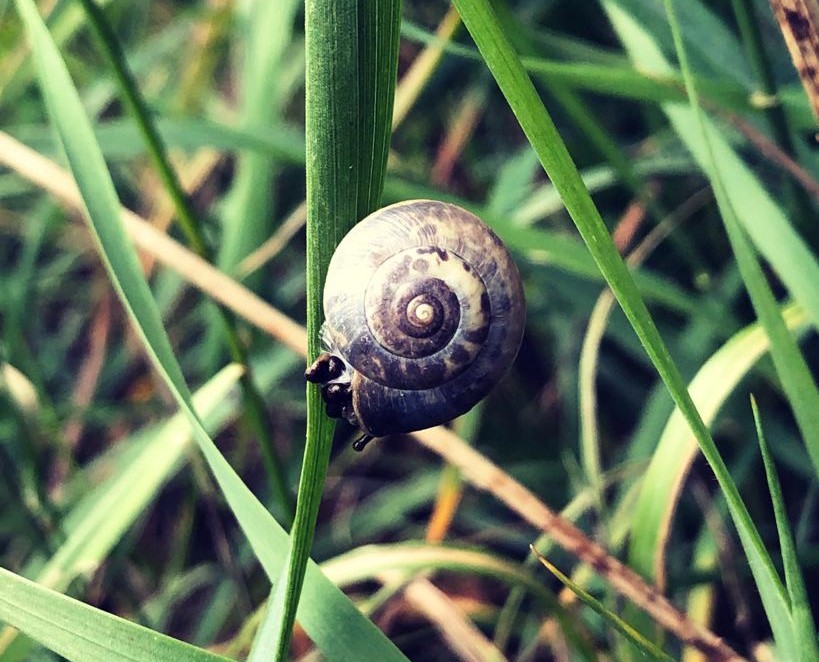
I loved reading that Max, and I’d love to answer your question! Yes I can see myself in the wild. I think I am the wild and so I can see myself all over the place! I think I see myself, and I also see difference to myself, and actually it’s in those spaces of contrast that I find the wild deeply helpful as it opens a question and a challenge. For example, when I see a fern growing out of a rocky wall, seemingly with no soil or traditional place to grow from, I see myself, my own resilience and ability to grow out of what looks like nothing, almost a mystery to the onlooker to understand: how does she do that? A beautiful mystery that must be being nourished and meeting it’s needs somehow. Then when I see the snail, and how it moves along at its slower pace, tracing this line, slowly along the surface, I think “Wow, I could be like that snail”. I could slow down, let everything fall away, go slow, leave a slippery glistening trail, let myself be led and inspired by that snail. And that helps me learn how I can be with myself in different ways and give myself the things that I need that don’t necessarily come to or occur to me in my usual way of being.

When I see a big strong oak tree, old as hundreds of years, that has been here forever, thick of trunk with deep roots strongly anchored in the earth and strong branches that can with stand any storm, staying strong and true and centred in its treeness, I think: yes, I am an oak tree, strong in the face of it all, an anchor for the eco-system around me, able to withstand the hurly and burly of the elements and time and the human made world, certain and secure. But then, when I see it’s thinner branches, and leaves, waving in the breeze, a sense of swaying and flexibility, a movement, response and softening to the wind and changes around it, it reminds that as well as being strong and anchored and secure, I can be an oak and also find some of that movement, that flexibility, that ‘give’, which ultimately is what helps the tree to endure and truly be strong over time. How both are needed in order to continue.

I guess in the wild I look for sameness and resonance, and difference and therefore opportunity to learn. Where can I see myself and feel connected and affirmed in my own nature and wildness, where can I see difference and potential and opportunity that might otherwise not be in my awareness as an option and possibility to explore, experiment with and potentially grow into.

The creatures in the wild that I am most drawn to are the most quirky and unusual (and perhaps often misunderstood): snails, bats, shrews, rats, woodlice, moles, frogs, sea horses and leafy sea dragons for example. The scrappy creatures that are funny and amazing and different, with special talents and intriguing ways of being. I love marsupials and platypuses in Australia – I have links to Australia and I think since childhood a connection to those animals that has formed some of my experience of wild life. I love them because they’ve survived with their quirks seemingly against the odds, and they strike me as creative and inspiring. I like possums and koalas and echidnas – animals with pouches! I breast-fed and put my babies in a pouch, so it’s no wonder really that I feel an affinity with these creatures. I’m grateful for the animals that remind us all that there’s lots of ways to look and be, so many different definitions of ‘cute’ and ways to exist in the world beyond the traditional, mainstream perspective.

How about you? What do you see of yourself in the wild?

Max:

I am drawn to the wolf. The symbolism of the wolf and the actual wolf. Wolf as the ultimate representation of the wild. Wolf as the domesticated dog gone feral (or is it the other way round?). But do I see myself in the wolf? Am I the wolf? The answer is no.

Much as I would love to see myself in the totem animals, the wolf and the bear and the lynx, the lion and the tiger and the whale, I have accepted that I am not these beings. I am a part of the ecosystem, along with everything else, but I am small. I do my thing in my own way, working hard to survive and thrive, but often I am unseen. When I had this realisation, whilst sleeping on the ground under some towering trees, I initially felt some sadness, but quite quickly this feeling was transformed into relief. As human beings, we are often burdened with a pressure of needing to ‘make an impact’ or ‘change the world’ and I have spent a lot of time worrying about whether my impact was enough, whether I really could change the world. Now, we could debate for hours about what impact I might or might not have had during my time on this earth, but for me, the acceptance that I was only a small being and operated as part of an interconnected system was significant. Pressure off. Ego in check. Focus on the here-and-now rather than the legacy that might be left behind. A tiny being. A blink of an eye. One gust of wind. A worker bee. One garden bird. A single fish. All important, of their own way, but only because every being is important. That is where I see myself.

Having said that, I picture a flock of birds where one is flying slightly differently, a school of fish where one looks as if it is carving out its own route, a cluster of trees in which one is standing apart from the rest. I see myself in non-conformity, in not fitting in. I see myself in beings which are surviving and thriving in unexpected ways. Queer ducks. Gender-bending clown fish. I see myself in the nature stories which are unreported and invisible and must be sought out.  Stories which are hidden within the dominant discourse of male dominance and survival of the fittest. Stories which are deliberately ignored by those who can only see the world through their own patriarchal lens. These beings are out there, in their thousands, and I see myself as one of them. The wild is diverse and if we want to see ourselves in the wild, we can find ourselves in that diversity. We just have to look more closely. We just have to pay attention.

Sophie, you started this piece by citing Mary Oliver, who asks “tell me, what is it you plan to do with your one wild and precious life?” (Poem: A Summer Day).

In the same poem, she also says:

I don’t know exactly what a prayer is.

I do know how to pay attention, how to fall down

into the grass, how to kneel down in the grass,

how to be idle and blessed, how to stroll through the fields,

which is what I have been doing all day.

And here, Sophie, is my question to you … but one for another day and another piece of writing. What for you, is a prayer?

Answers on a postcard, please.

Lost things (i)

Author: Jenny Rose

I have lost these things:

faith

plants which died

relationships

my health

a step ladder

a set of fire tools

the capacity to walk or drive very far

sleep

clothes I used to love

names

things I wrote 25 years ago.

Somewhere, is there a forest of lost things? My step ladder standing like a strange tree, adorned with clothes – that silk dress, the cord jacket, the hoodie. Next to it, a thicket of pokers, shovel and bellows. In a hollow, shrivelled plants-that-were. There is a dell, where a mist of sleep floats hazily, and around it stand shadows of people who were once with me and now are not. Around their feet, a carpet not of leaves, but of scraps of paper, the writing on them (my writing) blurred by light, water and time. My health is scattered, some of it trodden mud by the path, some of it buried by squirrels, much of it slowly composting down. And curious flowers sprout around – their blossoms intricate filigree that, when I look closely, spells out the words I forget – names of people, places, objects and ordinary things.

Can I trust the forest to hold these things? Can I trust that I will be ok to go on without them – that, as I have managed without the fire tools, I will also manage without the words? That the loss of physical capacity has made space for new things to grow?

As much as has been lost, what has been found?

Lost things’ inspired by Kristen Roderick’s ‘The Power of Lost Things’ ritual, https://www.spiritmoving.org/blog1

This poem was originally posted in April 2022 by Jenny Rose on: Of Owls and Ancestors (wordpress.com)

Breathing is not an indulgence

Author: Mirel

On this land,

winter is ending

and I can still rest.

I am kept awake only by coffee and screens,

and endless reems of news.

As I scroll from bed,

I hear groans, I hear screams,

from beneath the rubble

of bombed out theatres

and decimated apartment blocks.

When I stretch,

I slowly awake to the world again.

When I rise,

I take my body out on the land again.

In another land,

bodies stretchered out of hospitals,

bodies on the roadside,

body bags tipped into pits.

In another land,

the war dead are singing in the rite of spring.

– – –

Our breathing is not an indulgence. 

From Pain to Power: a collection of writing from the Soul Fire Writing Retreat, March 2022

Introduction

The Soul Fire Writing Retreat was held in March 2022 and was facilitated by Max Hope and Sophie Christophy. Our intention was to offer a supportive and encouraging environment for those attending to re-connect with the ‘why’ behind their work. We were inspired by bell hooks and her thoughts and practices on feminism, social justice, truth-telling, and the practice of love.

During the retreat, we wanted to co-create a piece of writing that we could publish at the end of the weekend, something which communicated our collective and personal commitments to change making, authenticity, speaking our truth, and speaking from the heart.

This collection of writing – a chain letter – is the result.

‘From Pain to Power’, a prominent theme in the work and words of bell hooks, created the focus for the chain letter, and was a thread that wove throughout writing provocations and embodied sessions during the retreat. The writing process worked like this: one person started writing and finished with a question. It was then passed to the next person who wrote their response and finished with a question. Their writing (and not that from the first person) was passed on to the third person, and so on and so forth. The speed of the chain letter sped up as the weekend progressed until finally, after 30 hours, we had finished. The order of the fifteen writers was picked randomly, literally as names out of a hat, and each writer was under time pressure to complete their contribution. No-one saw what everyone else had written until we had all finished.

This is the finished chain letter. This is as it was written, mistakes and all.

MAX HOPE

Max is a facilitator, educator, researcher, activist, and writer and the creator of Write On Changemakershttps://maxhope.co.uk/

This is it. Today is the day. There are fifteen of us at a writer’s retreat and the sun is shining. We are here are we are ready. This retreat is for activists and changemakers. It is about building connections and creating community. It is about writing and speaking our truth.

We are here and we have stuff to say.

We are a mixed bunch of people. We do not speak with one voice. We do not sing in tune. We are united in a desire to advance social and environment justice, but what does that mean? What do we do? What do we think? Who are we, really, at the core of ourselves?

Our retreat is inspired by the work of bell hooks (1952-2021), a prolific author, activist and academic who persistently spoke her truth, even in the most challenging of circumstances. Her courage, her intellect, her compassion, and her fire are with us here. She wrote about feminism, social justice, racism, colonisation, inequality, patriarchy, love, power, and so much more. She wrote in authentic but unconventional ways. She went against the grain. She refused to follow the rules. The power of her work was not always recognised by the establishment, but it is recognised by us. We honour her and the hundreds of other activists who gone before us.

bell hooks said that: “People are hungry for dissent. People are hungry for provocative voices that go to the heart of the matter.” (quote from Speaking Freely)

We have provocative voices.

We want to go to the heart of the matter.

My own journey as an activist began as a young child. I was born into a political family. My parents were Quakers and were involved in party politics and they created a home environment in which the status quo was questioned. My mum stood for parliament. My dad was a local councillor. They volunteered their time for causes to advance social justice. Housing and homelessness. Romanian orphanages. Pacifism. Environmentalism. Sustainability. Food poverty. The list goes on. The point is that I never fell into the trap of believing that politicians and other powerful people were right or that mainstream ways of thinking were the best way to proceed. Everything was open to question. It was OK to think differently.

I have found my own fire, my own rage, my own purpose. I have chosen where to put my energy and where to fight. I stand alongside other folk who are doing other things and I cheer them on, but their fight is not always the same as mine. We must choose what burns most brightly for us, what keeps us awake at night. My fight is about children and young people, about education and social justice, about the wild world.

I am curious about what lights other people up, what keeps them awake at night, what makes them do something to change the world.

Mirel, what is your fire and where did it come from?

MIREL

What burns most brightly for me – when I feel into that question more, I do wonder. I feel like my fire, whatever it was, has burnt down to a smoulder. It would need more fuel than I have available to me right now, as well as some energetic fanning, for it to blaze brightly again. Honestly, at this time, I feel my task is simply to keep a single ember aglow until I have the resources available to kindle my fire again.

Right now, I need to rest and take stock of things. I need to regain a sense of perspective.

It’s all well and good talking about changing the status quo, for a more equitable society, blah-di-blah-di-blah, but much of change needs to happen from within. And I’m tired of trying so hard. It’s exhausting, simultaneously trying to affect change outside and in. I’m faced with living a kind of paradox – spurred on to enact some change in the world but not fully equipped to enact it either. Discovering at times I am motivated by very sense of heroism that I am trying to kick against. Becoming more resourced the more I don’t achieve what I set out to do. And somehow ending up affecting change when and where I least expect it, or not at all. And sometimes fizzling out.

I don’t mind all of that but it’s the negative internal monologuing that’s the biggest pain in the ass. The judging, the self-deprecation, the sense of being an impostor. Actually, that’s probably the most difficult thing to change – not “the world”, but the self the world I am trying to change created.

Let’s think about that for a second: The self that the world created is trying to change the world. Right.

Things have their own way of working out. Mystery has a sick sense of humour. For me, the work is just that – not the outcome, but the engagement. There is an irony to trying to make change happen whilst still being part of the problem. The best resource I have in this process is ownership of my own imperfection, curiosity around that, kindness around that. And perhaps my soul’s calling is simply to lean into life, embracing these paradoxes, with humility, and to develop a quality of steadfastness that will probably take me my whole lifetime, filling up my saddle bags with enough self-awareness and self-compassion for the ride.

Caitlin, what is your soul’s calling?

CAITLIN HARRISON

Caitlin Harrison: Unschooling parent, adventurer and abolitionist

Mirel, thank you.  My soul will get to itself in a moment.  I promise.  

First, I want to repeat your precise and poignant invitation to think about the fact that, “The self that the world created is trying to change the world.”  Yes!  Thank you!

I am so grateful for your delicious articulation. I recognise and experience this phenomenon as a whirlpool of responsibility, a swirling whirling within which my response-ability is formed and born as a direct effect of the oppressive structures to which I must respond.  And in this fluid, dynamic, cyclical and spinning space, my soul’s calling is to recognise moments to practice freedom, to respond as though I have been in-formed by the worlds I wish to inhabit, worlds defined by love, passion, peace, transformation, truths, honesty.  My soul’s calling is to humbly recognise, moment by moment, the ways in which my multiple intersecting identity privileges create illusory freedoms and ease that depend on the dehumanisation of “others.”  My soul’s calling is to practice, enact and embody disparate freedoms that are contingent upon everyone’s liberation.

I believe that part of my soul’s part is to play a role in making the world that formed me and us more visible, to expose and interrogate hegemony.  My soul feels called to share socialisation’s complexity while reducing our obsessions with individual culpability.  I believe this may free up energy for collective responsibility.

Sara, where do you locate your Self within the concept of responsibility, as it relates to social change?

SARA PAIOLA

Sara Paiola is a feminist, a mother, an associate tutor in law, and the co-founder of Free We Grow a child-directed, play based, educational space. www.freewegrow.co.uk https://www.facebook.com/freewegrow

Caitlin, thank you. So your question to me: “where do I locate myself within the concept of responsibility, as it relates to social change?”

I feel responsible. The most important aspect of this for me is to be the change I want to see in the world. For supporting/making a social change. At the same time I know it is not down to me only so I do not feel guilty, if and when, I cannot do more. I do what I manage. I don’t like the neoliberal idea of individual/ised responsibility. Meaning indeed we are all responsible but for instance my recycling will not clean up the world. This individualised idea tends to divide people instead of creating solidarity and collectivity. Of course, for instance, I keep recycling as an individual but I think that voting for politicians that will struggle to bring some change in the country is more important than for instance recycling but not voting. Even though of course without proportional representation in the UK voters have less influence on the results and on how much social change happens.

I come from a very political/activist family who spoke about world issues a lot and as much as it was great in many respects it added some kind of heaviness to me as a child. So I think there is a balance between involving children in social change and letting them off the hook so to speak as it is more our responsibility as adults to change the world our children/the future children live in. They are not responsible for the mess we are in so why make them feel guilty/pressured. Then it will be their turn – to make social change – when they are ready. Maybe as a child I felt too responsible. I think children learn from imitation/modelling so if we adults are socially responsible – or socially conscious enough – they will most likely grow a social consciousness too. If we trust humans/children to be innately curious and self directed then there is no point to push them and expose them too much to social change issues as to me it seems a sign of us adults being anxious. Basically a sign of us adults not being able to control /tolerate our anxiety and feel the need to put pressure on people/children to become socially conscious – sometimes at the expenses of letting this passion grow naturally and letting them be.

For years I have worked in jobs that align with my beliefs in social change. Or, I volunteered in positions that align with my beliefs. I believe that in giving a better start to children they will create a better world so I have worked with children for many years (with refugee children and children who lived in refuges with their mothers who had experienced domestic and gender violence). A happier childhood can give the possibility to children to be more fulfilled adults and create a more peaceful and equal world.

Jenny “What does ‘love in action’ look like to you?

JENNY ROSE

My activism in the world is exploring what ‘Living well, Unwell’ means, and what healing and inclusion looks like for those of us going through this world in bodies with chronic and ongoing symptoms.) https://ofowlsandancestors.wordpress.com/

Sara, you wrote about responsibility, and then you have asked me ‘what does love in action look like?’

I suppose I’d start by thinking a bit about what that word ‘love’ encompasses – as it holds so, so much! And I think it gets used in a way that can feel idealistic, or vague and woolly, or naive. I know I can get irritated by hearing or reading a sort of ‘love is all you need’ perspective, that seems to ignore issues like social justice or power and privilege and oppression. So what does it mean to truly love? I think of the phrase ‘fierce compassion’ (not my words) and a sense that love can totally include fierceness and holding people to account. What does it mean to love someone who is so unhappy in their being and dysfunctional in their behaviour that they are seriously hurting others or causing damage? You ended your piece speaking about children. Parenting has been such a massive part of my life and it feels like a good place to learn from. Parenting consciously and presently has taught me about protectiveness, advocacy, boundaries, fear, respect, connection, safety, among other things. These aspects of love crop in my work around chronic illness too, in different ways…

Love in action looks like caring enough to step in but knowing when to step away and learning how to;

Love in action means being able to say no – and learning to hear no;

Love in action can be valuing others’ presence enough to make space to include them, whatever that means and even if we can’t relate to the things that are needed for that inclusion;

Love in action looks like being really clear about our own self-care – really radical self-care where we work to discern what our bodymind and soul need;

Love in action looks like coming back into our body and making peace with it – so that we can come into connection with others and with the world and the earth;

Love in action means courage – huge courage!

Basically, operating from a place of love means acting counter to most of society’s default ways of being – which come from a place of dominance and hierarchy and exclusion – and having a foundation of kindness, compassion, care, inclusion and valuing being as well as doing;

Love in action could be as fundamental as regulating our own nervous system, it could be as brave as challenging someone making offensive comments, it could be as expansive as taking the air fresheners out of our venue so that someone with chemical sensitivities can come to a group more easily;

And it means starting with ourselves, because we are part of the world and part of nature; the more we heal, the deeper that connection and the more our healing can impact others – and love in action is a feedback loop, I believe, where we are nourished too.

So, Sara, what does healing and self-care mean to you?

SARA MOON

Sara Moon (she/they). Sara is an emerging Hebrew Priestess and co-founder of Miknaf Ha’aretz, a collective devoted to building wild, radical-diasporist multi-generational Jewish community in the UK. IG @jewdica

Thank you Jenny. This is a pretty live question for me as I emerge from a recent episode of a pretty serious depression. I’m still in a tender place and having to honour very intentional self-care routines to stay well. Such episodes are a part of my life and I have learnt to live in a way that enables me to straddle their interruptions through quite an elaborate scaffolding of self-care.

For me, healing and self-care is part of the justice we can make for ourselves in this broken world. Reclaiming that part of ourselves uncorrupted by the forces that have sought to belittle or destroy us. To re-build our souls.

Audre Lorde, the self-described ‘black, lesbian, mother, warrior, poet’ shares,

Caring for myself is not self-indulgence, it is self-preservation, and that is an act of political warfare.”

I don’t nearly face the same struggles Audre Lorde did but this sentiment rings so true and is applicable for all of us trying to survive amidst hetero-normative, white-supremacist, capitalist patriarchy. And for me, self-care really does feel like an act of self-preservation though it’s taken me many years to get to this knowing. Especially as someone fiercely committed to social change and all too aware of the urgency of many struggles we face. How can I focus on myself when so much needs fixing? How can I turn my back on struggles I’m committed to? I have found this a hard line to tread. But discovered the hard way that I’m no good to the movement burnt out and exhausted!

And yet, for me, the journey of self-care can also be slippery. It can be tricky to find the balance, to know what efforts will topple me, what I can bear. And as I wrap myself up in a state of wellness and resource, suddenly suffused with a sense of joy, even liberation, am I deluding myself, when still, the material conditions of the world are still so unequal?

I wonder a lot about how to stay in the joy of self-preservation without dispelling the rightful rage, without destroying the fire that will propel us to act for justice… I think this also goes back to what you said Jenny about ‘fierce compassion’ and part of ‘love in action’ being to hold people to account. I think this must include ourselves too. I have found myself in recent years taking so much care to stay well I have felt I have not held myself to account enough to do the activism the world needs me to do….

It is so counter-intuitive to ‘do nothing’ as the world burns and so many struggles are raging. But for me, the journey of healing & self-care must be embedded into our activism. Not something we stop activism to do. This is a part of the ‘pre-figurative’ politics I believe in. That how we build is what we build. That we go at right pace. That we ‘do’ activism in a way that’s conducive not just to our long-term health and mental wellness but to regenerative, juicy & creative activism too.

For me, these are some of the ways I am bringing my full power to my life and activism.

Sophie, what do you need to be in your power?

SOPHIE LOVETT

Writer and changemaker inspiring parents to empower our children – and ourselves – to shape a fairer, kinder, more sustainable future. www.raisingrevolutionaries.co.uk Instagram: @raising_revolutionaries Facebook: @raisingrevolutionaries Twitter: @sophieblovett 

Oof.

Thanks for this, Sara. It’s a pertinent question for me right now as I feel like lately I’ve been struggling to inhabit that place of power, struggling to bring my whole self to the work I want – need – to be doing. 

There’s a fine balance for me between pushing myself right to the edges of my capabilities to feel the fizz of energy that drives real and meaningful change, and sustaining that in a way that nourishes my soul’s energy rather than draining it. 

I am certain there is little power to be found in comfort, in doing the things I’ve always done in a way that becomes unconscious: unthinking, unintentional.

The biggest catalyst to action for me was the transition into motherhood: the greatest physical challenge of my life, and one laden with spiritual and emotional challenges too. It still carries me now, still takes me to new and surprising places. But I comfortably inhabit that role of ‘mother’ now, so I have been sensing that I need something new. 

And yet in seeking that there is still a place for ritual, particularly when it brings me out of my head and into my body.

I am recharged on a regular basis by the river, the icy waters searing my skin and cleansing my mind of the prickling anxiety that all too quickly takes over nowadays. There’s a clarity of purpose that comes in the minutes and hours that follow – it’s simultaneously familiar and unexpected. 

It’s not just that physical effect either: there’s something about immersing myself so viscerally in the natural world that reminds me of the ecosystem that I’m a part of, that is a part of me.

There’s something about that ecosystem that is an integral part of my power.

Being in nature – by the sea, in the woods, on the moor. Tuning into the turning of the earth and the moon, honouring the seasonal shifts both outside and within me. Learning new old rhythms to replace the old new ones foisted upon us by the patriarchy.

Recognising too that humans are a part of nature, a part of the ecosystem that challenges and sustains me. And that the right humans are the ultimate source of empowerment.

We are not supposed to do this alone. And it is exhausting to always have to fight to be understood. It is so resourcing to be buoyed up by the explosive energy of like minds meeting, to hold each other in a cocoon of shared values and together find that place of stretch.

And on that note, Hannah, the question I’d love to ask is  – have you found loving communities of resistance? 

HANNAH ROWAN

Hannah is a mother, a daughter, a football playing lover of the sea, the woods, books, words, and radical thought and action.

The short answer is yes.

The more complicated answer is that I have been aware of them for at least half of my life, felt drawn to them, felt very firmly outside of them. Sure they were for others, not for me.

There’s a lifetime of being willfully left out behind that certainty. I’ve discovered over the past few years that the people and the spaces that were not for me, were exactly that: they were the people and spaces that were not for me. And that just because they were not, it did not mean that there were no spaces or people for me.

So I became brave. I put myself out there in the spaces I felt a draw to and have found that not only are there loving communities of resistance there, but that I have what feels like a welcome place in them. It can be hard to trust the acceptance and welcome when I am on my own and my doubts creep in. But the sense of community and belonging grows all the time.

They are not just loving communities of resistance, but supportive and nurturing.

The sense of belonging comes not from open arms and a loving landing space (though when that has been needed, it has been there, and thankfully so), but from feeling like my own self, my thoughts, my own offers of support are valued and a part of a growing wholeness.

I have a part within the communities I have found, and they have a part in what I have found within me. And so the communities grow while I grow. Or I do while they do. Communities aren’t really found, they’re continually grown, but I am glad to have found that I have space within communities that are made up of people wanting to grow a world that I want to live in.

Rachel, where does love feature in your life and work?

RACHEL MUSSON

Rachel Musson is a teacher, writer, speaker, facilitator and thought-leader on regenerative education and holistic wellbeing in schools. www.thoughtboxeducation.com www.rachelmusson79.com https://twitter.com/rachelmusson79 https://www.linkedin.com/in/rachel-musson/

I really hear you stepping into your bravery. Sharing how nourishing being part of a loving community of resistance feels to you echoes strongly in my own landscape of inner growth and outer change. The process of being brave, being safe and being connected has allowed me to strengthen my work from within and without, whilst recognising my own sense of connection growing all of the time.

Connection, for me, is what love is and is all about.

Since leaving my teaching career in mainstream education and journeying (both literally and metaphorically) down a different pathway, I have spent a lot of the past decade exploring and twirling in the delicate dance between being and doing. Almost every step I have taken off the mainstream pathway has felt a step into something more nourishing, more rewarding, more natural, more energising, more connected.

Teaching, learning, writing, travelling and journeying across the world and into my inner landscape, I’ve met love in many guises. I’ve learned to welcome the invitation to deepen my own sense of being love in balance with the love I give and receive. Learning how to dance lightly in this space has allowed me to strongly feel into the simple, universal power and value of connection.

Life’s logic springs through connection. We may be forgiven for believing that we’re all individuals out here doing our thing, but our singular lives only flourish because of all of the invisible webs of connection happening out of sight, allowing each of us to thrive. Like the mycelium networks in the soil, we’re all of us sharing, caring, feeding and resourcing each other, all of us part of infinite webs of connection, all of us thriving through a conscious and unconscious network of care. Of love. 

Birthing a social enterprise focused on regenerating education for a thriving world has allowed me to land in a place wherein I am both practising and sharing the core values of love and connection on a daily basis. Through my work I am helping young people, educators, school communities, I’m working to help stitch back together the places and spaces many of us have become separated – from ourselves, from each other and from the rest of the natural world.  My work is enabling and allowing people to remember how (and why) to love again: how to love ourselves, how to love each other and how to love the rest of the natural world.

I am living the ethos, values, offerings and focus of my work within my own life by living a life built on the foundations of conscious care: of self-care, people-care and earth-care. My life and work weave themselves together in a balance of being the change and doing the change by remembering how to be fully human and celebrate the interconnectedness of life. I feel I have landed fully into my soul’s purpose in a way that both nourishes myself and others in the process.

Jo, what is really at the heart of you and your work?

JO McANDREWS

Jo is working with bold adhd genius for paradigm, change to grow resilience for children and young people in the face of climate crisis and all that it brings. https://www.jomcandrews.com/

Thank you for this question. It makes my heart sing and my belly squirm with excitement and discomfort. How can I find words to answer? Well, I can at least give it a good go!

At the heart of my work is a longing for life, love and peace. I see the pain of the world, the injustice, the destruction of life and I feel that pain in my own life, in my own body.

I am immersed in the study of human neurobiology, trauma, resilience and earth connection. I know what we need to live. I know how to solve climate change. I know what we need to live with respect and love on the earth into future generations. What a massively bold claim! This is at the heart of my work. I see what has gone wrong and I know how to put it right, and crucially, I am driven by urgency and longing to change the world.

My work has pretty much always been around supporting children and young people, to support their voice in the world, to advocate for their needs and to build networks of resourced adults who have the capacity to meet their needs. I have worked with bereaved children, then set up as a funeral director, put my heart and soul into creating community based unschooling projects, then trained many hundreds of education, health and social care professionals in understanding and meeting children’s basic needs for thriving.

At the heart of all that is the knowledge that childhood creates culture. It is not just that I want children to be happy, it is also that I know that everything an adult does and does not do, is rooted in their childhood, and that this in turn creates the systems that humans create. Warm care and love creates values of inclusivity and justice. Capitalism and colonialism depend on destroying this capacity to love and it is now destroying all life.

Now I am focussed on growing children’s resilience in the face of climate and social collapse. The stakes have never been so high. At the heart of all this is the sure and certain knowledge that humans need love to survive and to be able to honour the life of others. And the certainty that the systems of separation and domination that are the basis of our economic, political and social systems are stealing this from us and making us incapable of living fully.

So I see the connection between a mother, supported and valued by her community, smiling into the eyes of her baby, and the survival of life on earth. It is a direct link.

At the heart of my life and work is a longing to share the urgency of the change that is needed and to embody the qualities of clarity and compassion that is needed to make it happen. Love in action, together.

Emily, what are the most radical things you want to say to the world?

EMILY YOUNG

I am Emily, a mother/writer/designer/interior architect helping to take down the walls of oppressive systems brick by brick through de-schooling myself and asking awkward questions since 1983. https://www.facebook.com/emilystinywindows/ instagram.com/emilys_tiny_window https://tinywindows.wixsite.com/tinywindows

Thank you, Jo M, for your question and very moving piece “childhood creates culture” – I love and honour this.

In answer to the question, I will start with my reaction to the word radical. I feel like the word suffers from a bad reputation, and I initially let this construct get in my way. I read ‘radical’ and jumped to radicalised and thought extremism and the idea of the problems that came from fundamentalism rather than taking the positive perspective of the word ‘radical’. My subconscious walked me down the binary path that my conscious mind has been stepping away from and in this, I believe lies one answer to the question – I want to say to the world that humanity is not polaric and I feel this oppositional thinking is the cause of so much destruction, trauma and pain.

On a macro scale, the Earth has poles, creating a magnetic field and providing direction, which our Western post Enlightenment culture interprets as linear: north – south. So, we go from A to B in a linear fashion, often ignoring all the nuanced beauty in between. Yet, nature knows that the Earth is spherical, and the magnetic field creates a beautifully circular, all-encompassing spectrum.

On a meso scale, humanity has constructed the complications of ownership and dominance; have – have not. The fallout from this has created pretty much all the trauma humans live with and normalise, collectively and individually and as Jo M spoke about, this dominance has resulted in the separation from the Earth, from each other and I would like to add, from ourselves, wherein we find the micro scale.

The separation from ourselves is the (heart)breaking point. My radical position on this is that I want to have safe and consensual containers for everyone to express their deepest and darkest shadows, however radical or seemingly unacceptable they may be.

If adults can express this part of themselves, rather than be locked away, buried, suppressed under years of shame and conditioning, I believe people will be able to better accept their whole selves and love will ensue.

I have so much hope for the generation of children that witness this substantial healing. Their shackles will be so much less constricting, and their freedom will bring so much love.

So, in the Jo sandwich, I ask you Jo S: What practices do you use to help transform pain into power?

JO SYMES

Jo Symes is the founder of https://www.progressiveeducation.org/ which is an online inspiration hub exploring alternatives to conventional methods in education. “Progressive Education Group” on Facebook; @ProgEducat on Twitter/Insta/Fb page

Thanks Emily, what a great question. Before I answer it, just to give you some context, my pain comes from the trauma around my sons’ experiences of starting school. They both became fearful of school, their lights went out and they lost their love of learning. They were in pain and so I was in pain. It continues to break my heart how our education system fails to put mental health/wellbeing, social justice and children’s rights at the core.

There are three things that spring to mind when I think about how I work to transform this pain into power:

  1. Putting my energy into something positive.

To quote bell hooks:

“When we only name the problem, when we state complaint without a constructive focus or resolution, we take hope away. In this way critique can become merely an expression of profound cynicism, which then works to sustain dominator culture.”

So in my work, rather than simply focusing on the problems and the criticisms of the education system, I strive to focus on raising awareness of more human centred alternatives to mainstream, as well as showcasing innovations within the state sector to celebrate the work of pioneering educators.

I aim to raise the profile of alternatives to conventional methods in education a) to help families who need something different now and b), to inspire change within the mainstream.

This work involves trying to normalise ‘radical’ approaches. I agree with you Emily when you say that the word ‘radical’ suffers from a bad reputation. In trying to normalise ‘radical’ approaches – such as unschooling or democratic, self-directed education – I steer clear from terminology like ‘radical’, ‘extreme’, and even ‘alternative’. These words make educational approaches which have their roots in social justice and children’s rights sound outrageous, ‘for others’, and irrelevant to the mainstream. I work hard to normalise these approaches as they are not extreme at all, they are simply common sense when you think about how children naturally learn, neuroscience, traditional indigenous communities and how humans have evolved. It is the conventional school system that seems outrageous, extreme and unnatural when you really think about it.

  • Kindness. I think it’s important to try to be kind to all, even those with opposing views. In the spirit of trying to be the change we want to see, I don’t think we should shame or blame, and I don’t think it’s helpful to have a them and us culture and see people with opposing views as the enemy. Noone intentionally sets out to harm children or uphold outdated harmful practices.
  • Self care and community. The most important thing which keeps me going is connecting with like-minded people. My facebook group has been my lifeline really, along with the Freedom to Learn Forum which I attended a couple of years ago, as well as connections with other social entrepreneurs and changemakers. I am particularly grateful for this retreat and being part of the Write On Changemakers community. Community and connection is key for me.

So, over to you Jai, how do you stay motivated as an activist?

JAI BREITNAUER

Jai Breitnauer, journalist, mother, disability rights campaigner and daily adventurer. @Breitideas on Twitter

At one point in my life it was my choice to be an activist. But it is no longer true that I can choose. Activism is simply how I exist and my motivation is the quest for lived, equitable experience.

I grew up in a nice white family, in a nice white town, with all the assumed privilege that implies. I was the first in my immediate family to go to university, something my parents believed was about furthering my education to get a better job, or to gain more respect. I have no doubt that they enjoyed, and perhaps still do enjoy, telling people I have a degree and an MA from a well-regarded establishment.

I’d flirted with activism before university, but it was during the six years I spent studying that I really found the ability to question the world and my place in it. Before that, I had assumed being academic meant knowing all the answers. University taught me that academic rigour is having the confidence to acknowledge you don’t have any answers, and to seek them out with the help of others.

Still, as a young adult, I was able to pick and choose my causes. I joined the Socialist Worker movement, I protested the war in Iraq. I was part of an occupation relating to data sharing and breaches, and I joined numerous letter writing campaigns. All these causes were important to me but I wasn’t directly affected by the outcomes. I was an activist because it felt like it was my duty, to use my voice and my platform to speak for those who couldn’t. It was this feeling, this belief that motivated both my career in journalism and working in communications with not for profits.

It wasn’t until I had children that activism became daily life. It wasn’t until I became a mother that activism became my lived experience. That inequity became a reality for me that I needed to fight to live.

The beginning was childbirth, and the lies women are told to get them into hospital and on pain relief. The next reality was the hypocrisy of immigration rules. As my partner, willing to work but bound into unemployment by his visa, stood on the precipice of deportation, I cradled our child and wondered how we would pay the mortgage without him. Meanwhile the taxpayer continued to whine about having to support mothers like me while also whining about jobs for the British. The next target then, was the patriarchy, the root cause of the issues our family had been facing. I’ve always identified as a feminist, but once I truly understood the damage the patriarchy does to men, and I could align myself with the progression of all genders through the breaking down of misogynistic frameworks, I found myself free to make these arguments with clarity. The natural progression of anti-patriarchal work, is anti-capitalist work, and that is the moment you realise everything is connected.

But even when I am not actively activist, I am still an activist. My existence, as a neurodiverse woman, is an act of activism in its own right. And daily I fight for the supports needed so my autistic children can equitably access education, healthcare, leisure facilities … I fight not just for changes in welfare and statutory provisions, but in the necessary change to the social narrative that is needed to provide true accessibility. I don’t want people to ask what they can do to help effect positive change, I want people to understand they need help to change themselves.

This is the truth I have to speak simply to live and breathe. It isn’t my choice but it is my privilege.

So, J, what truth do you need to speak, and why are you the woman to speak it?

J YEUNG

Unschooling mum of 2

The act of speaking my truth out loud and allowing others to hear or read it is terrifying for me.  I am immediately flooded with thoughts of my voice being unworthy in a sea of voices which are already out there.  There are already so many ideas, opinions and stories that it can be overwhelming at times to hear them all so what possible value can my truth offer? 

But I am slowly beginning to see that hearing the truths of others can be a balm, a deep comfort, it has certainly been the case for me in times of deep pain.   And this is why I am willing to speak my truth, in the hope that even one person may find some comfort and hope.

As a new mother, engulfed with advice, opinions and judgments from all angles and not knowing who to believe and what to do, I felt lost, lonely and unsure of myself – for almost 3 years.  The ‘perfect mother’ that I tried to be and the ‘perfect life’ that I tried to create was not the life that my son needed.  He resisted at every turn.  He spoke his own truth loudly and clearly.  It took me a while to hear it, and it was when my daughter was born that I could no longer ignore it.  I broke down, I felt deep pain and it was the hardest and best thing that ever happened to me.  I am eternally grateful to my son for this act.

I now know that the deep pain that had unravelled me was caused by a lack of freedom.  As a stay at home mother, I had a role in society and I knew that it was highly judged but not valued and so I tried harder and harder to convince people of my worth.  But it never worked.  I was put in a box and I needed to stay there and I didn’t dare express all of the frustrations that this brought up in me.

And then I began to look around and see this story repeated over and over again with other mothers, everywhere I looked, throughout history and all around me.  And then my scope widened and I began to see the effects of a lack of freedom everywhere, I couldn’t unsee the effects that it had on people.  In those closest to me, those out in the wider world and in the stories of those who came before us.  It was terrifying. Where freedom was lacking, no matter on how small a scale, I saw a missed chance for people to be their whole selves and when we can’t be our whole selves, then who are we?  This seemed to me to be the cause of so much of people’s pain.  How had I never noticed this before?

With the support of many wonderful people, mostly mothers themselves and this new realisation, I reclaimed myself and started to create a new structure for our family.  One that was built on freedom, freedom for each of us to express ourselves fully.  This thread of freedom is one I now weave into my life.  It guides my decisions and my actions everyday and I now see many inspiring people all around me doing the same and the incredible things that stem from this. This finally brings me great peace and hope.  This is at the heart of my work now and in the future.  This is my truth.

And I want to ask you now Sophie, what is really at the heart of you and your work?

SOPHIE CHRISTOPHY

https://sophiechristophy.com/

At the heart of me and my work is divine spirit. That is what I believe is at our core, and it is my reverence for this, that moves me to persist against all odds. It is life force. Pure light. A pool of it sits at our heart’s centre, and spans through our veins like rivers, streams and tributaries throughout our whole body. To our genitals, to our toes, to the tips of our fingers and to the tip of the nose. It is what makes us animate, what gives us life, where sound comes from. It’s desire is to run through us, down and into the earth, through the soles of our feet, or our asses, or whatever is closest to the ground.

And from above, from our heads, it wants to shoot up, into the sky. Into somewhere that feels like home, up there in the untouchable universe. A collective space, a collective pool, a place that feels safe and known, all embracing. A place from which we all come and all return. High high up in the sky, beyond anyone’s reach. Beyond anyone’s physical reach, that is.

We each have a birth right as a human creature on this planet to fully express ourselves in our divine glory. This is what I believe. And I want to see that right realised for each and every one of us. We are all needed. We are plants that want to grow, and we should be able to do so. To grow into the gnarly and/or smooth, ragged and/or lean, great and/or light potential brilliance that is embedded in us just like how a seed holds its own code to become manifest in its full glory.

Given, the sun, water, earth and air/loving care that it needs. Given the space that it needs, the cogent environment that knows what it is, that treats it like a plant and not like a fucking robot.

So the heart of my work, is to bring, or in the very least, not obstruct, those things: the light, the water, the nutrients of the soil, the fresh space and air. To bring the loving care. To hold the space for myself every day, and for others as much as I can manage.

The Joy of Missing Out

Author: Mirel

I choose the joy of missing out.

I choose to sign out without feeling like I should be doing something, without doing what everyone else is doing, without apology or feeling guilty, or buying Into feeling like I missed out. Without feeling like something is missing.

With JOMO, there is completeness in my own experience.

JOMO is… reading bell hooks in the corner whilst others are chatting. 

JOMO is… having a nap during a writing session.

JOMO is… ducking out of a work activity to write.

JOMO is… having a bath by candlelight while everyone else is at the fireside.

JOMO is… going to bed early.

JOMO is… not knowing where anyone else is. 

Creating radical changes in education … is it more effective to work ‘within the system’ or innovate from ‘the outside’? A dialogue between Max Hope and Sophie Christophy

Authors: Max Hope & Sophie Christophy

Max Hope and Sophie Christophy share an aspiration to radically change the education system, but the journeys that brought them together have been completely different. Max started out as a youth worker and spent a decade as a university academic, researcher and lecturer and writer before becoming Director of Rewilding Education and Co-Lead of The Lodge. Sophie is a feminist and children’s rights activist, an unschooling parent and Co-Founder of The Cabin and The Lodge, two self-directed and consent-based settings for home educated children. They are activists and partners in work and in life. In this exchange of emails, they explore whether it is more effective to work within the system or to innovate from the outside and unpick some of the painful decisions that they – and others – must make when deciding where to position themselves and put their energies.

This dialogue follows on from a previous one about Rewilding and Unschooling.

Max: I want to radically transform education. I have spent many years trying to do this. Sophie, you know this, and we share so many of the same values and visions about how we want the world to be. But our histories of how we have done our work are different, and I’d love to dive into some of the debates that we have had about a) what is the most effective way to try and ignite and inspire change; and b) what personal choices we have made – and are still to make – about how we want to use our ‘wild and precious lives’.

My journey started as a youth and community worker for a radical charity that worked with young people who were on the margins of society. That job did not feel like I was ‘in the system’ at all, even though most of the young people I worked with had been involved in (or excluded from) mainstream school. After fifteen years, I left this job and started a PhD. I felt burnt out and exhausted from listening to young people who had been so battered by the education system, and I wanted to get to the root of the problem. What was going wrong with mainstream education? How could it change in ways that would be more inspiring, engaging, and useful for young people? What could be learnt from some of the more radical types of education that were happening in ‘alternative’ settings?

My decade as a university academic felt like I was trying to change the system from within. I spent time in mainstream and alternative schools. I worked with teachers and ex-teachers. I created projects which engaged with students and tried to support them to have increased agency in their schools. And the university itself, like it or not, was a mainstream institution. There were rules and procedures and formal outcomes. I was teaching, researching, and writing within this mainstream system, and trying to push at the boundaries of what I could ‘get away with’ so that I could practice in the way that I wanted. Eventually, I left, and although I miss some of the work that I was able to do, I certainly do not miss the stress and strain of being in that system.

Sophie, we met through Phoenix Education, a charity that has big ambitions about transforming education. At that point, you were home educating your children and had already set up The Cabin. You were firmly rooted outside the system. You were a pioneer. I was still inside the system, working for the university and undertaking research in and with schools. I was excited about all the amazing stuff that was happening outside the system but was still deeply committed to putting my energy into changing the mainstream.

Our lives have both changed. I would love to know where you stand now. What, for you, is the most effective way to operate? Is it as an innovator within the system or as a pioneer outside of mainstream? And what does this mean for you personally right now?

Sophie: For me personally, it is about finding ways to be a change maker that are manageable and sustainable in the context of my own life. Consistent, persistent effort, that can last a lifetime is part of my theory of change, and it influences the work that I do, how I use my time and energy, and how I care for myself along the way. As you said – when we met, it was as I joined the Board of Trustees at Phoenix. I was at the time and still am an unschooling, home educating parent. I’d just co-founded the Cabin the year before and was a few cycles in running the Consent-Based Education courses. I’d spent years before that running community-based projects creating spaces for children’s rights, establishing home ed community in my local area, and prior to that nature based space in the woods for families with young children in London.

I was already writing – a blog, and for the local paper and a local families magazine, about children’s rights in the family and raising awareness of home education as choice. In 2014-15 I had tested out the potential for making change via mainstream politics, by standing as Green Party candidate in the General Election. I had done some speaking and workshops, on change making and the political and personal transition from patriarchy to consent-based culture. I was deep in the experience of motherhood and parenting discourse. In all of this I was also doing my best to love and support my children in staying connected to and in-tune with themselves, to grow in a way that nurtured them and met their needs. That’s no small feat in the dominant culture in which we live. 

I think what I’m trying to say by sharing this is that I was in a period of experimentation, learning, agitation, and high activity. I was desperate at times, and up against deadlines such as the school starting age that put pressure on my activism and work, but I was determined. I always wanted to do right by my own children but not only them. I wanted to do right by all children and for society to change. I wanted social and environmental justice not some time but now, and I was serious. But I was also overextending myself and out of what felt like necessity in a burn out cycle that was not good. 

You asked about whether it’s more effective to innovate from inside or outside the system. I would say it’s most effective to start innovating from the exact place of where you are right now. To first experiment with yourself. To learn and understand as much as you can about your own values, and to try to live them in every small moment, action and thought. To understand your strengths and skills, to understand your gaps for learning and do that learning. And then use those skills, that learning, and yourself, to be impactful in your exact current circumstances. Wherever that is. And test that as far as you can go, until you know it’s time to start trying to do something else. What do you think?

Max: My drive for wanting to transform the education system didn’t come through my own experience of having my own children. I didn’t have to make a personal choice about whether to put my own children into school or to choose which school might be the most suitable option. Would I have been prepared to move house? Would I have home educated? Would I have set up an alternative like The Cabin? It is all hypothetical because my life’s path did not lead me to having to make those choices or to act from that place.

Instead, I encountered dozens and dozens of other people’s children in my role as a youth worker. I learnt so much from them and from my experiences of trying to develop innovative ways of re-engaging them with learning again. We had to create exciting, relevant, and fun activities that did not, under any circumstances, remind people of being ‘at school’. What I learnt, and this felt important, was that it was really not that difficult to find ways of engaging even the most ‘hard-to-reach’ young people if the relationships between us were respectful, genuine and trustworthy. Young people could smell inauthenticity. They knew when they were being conned. And, by contrast, when they were trusted to self-direct their own process and make their own decisions, they rose to the challenge and were eminently capable to doing so.

To me, this was not hard to understand. It was not rocket science.

I continued to be shocked that the mainstream education system continued to get it so wrong. Year after year, young people would tell me the same stories. Young people being bullied for being gay, sometimes by their own teachers. Being disciplined for wearing the wrong shoes. Kicked out for talking back. Forced to do certain subjects because they were not in the right group to choose other options. Made to stay in isolation booths for the whole day. On and on and on.

That was in 2007. That was where I was at in my own life. Tired and frustrated and angry.

It felt like a deeply personal move to leave youth work and head into a university. This was not about my career or professional journey or anything else. This was about wanting to make an impact in the lives of children and young people. I genuinely believed that this was my best chance to do that, and I never lost sight of that aspiration.

Sophie, you say that “it’s most effective to start innovating from the exact place of where you are right now.” I agree – and I don’t. I agree in that we can start from where we are at, whether that be as a parent, a youth worker, a policy maker, a politician. We can all do something from the place we are, and it gives us a sense if agency to know that. We can all do something – and we can often do more than we imagine we can. So yes, I do agree with that.

Where I disagree is that I also think that we can choose to position ourselves in a place where we believe we might have the greatest impact. I can choose to position myself in a university, a school, a policy institute, a picket line, a home education setting. I can be an anonymous blogger, a teacher, a journalist and so on.

We don’t all get to make the same choices.

This isn’t a competition.

But we get to make our own choices from our own unique circumstances.

Right now, I am choosing to co-lead The Lodge with you, the new setting which flows on from The Cabin. This is outside of mainstream and is aimed at home educated young people aged 10-12. This positions me as ‘outside of the system’ and I am finding it energising, refreshing, and healing. I love it. I am still holding an ambition that our practice might, in one way of another, influence mainstream practice but I am no longer fixated on trying to make this happen.

When I look at Two Loops Theory – which you introduced me to whilst we were at Phoenix – I can plot my own journey. As a youth worker, I was in a ‘hospicing’ role in that I was picking up casualties from a broken system and trying to help them get through. At the university, I was trying to innovate within the system itself, whilst also trying to shine a light on the work of pioneers in the hope that it would influence the mainstream. I am now more removed from the mainstream and less preoccupied with it and am instead focussing on pioneering practices which take place in the new paradigm, outside of the system.

I find it more energising and less exhausting to be outside of the system. There is a breeze out here and it feels hopeful and optimistic. We are creating and inhabiting the world that we want to see.

But Sophie, sometimes I also feel guilty.

Most children and young people are within the system. They cannot get out and play with us over here.

If we want to change things for a larger number of young people, don’t we have a responsibility to try and change the mainstream?

Sophie: You feel guilty? Why do you feel guilty? You haven’t done anything wrong or anything to feel guilty for as far as I am aware. I don’t feel guilty. I’m not going to carry the guilt of a system that was never built to respect children. That guilt deserves to sit elsewhere. I don’t feel guilty for making difficult choices at personal cost including extreme experiences of loneliness and isolation at times, in order to do what I thought was right for the health and well being of my children, just because I couldn’t extend that same opportunity to all children. I sure have tried to open as many doors as possible to other folk to make their own choices that included not participating in schooling. To create community other than school, which is one of if not the main draws of school for many people – a sense of belonging and the chance to be around other young people.

The fucked thing about this is the level of denial around the issue itself. It’s hard for people to stare in the face of the coercive and controlling dynamic of traditional schooling, the cruel methods of behaviour management, the marginalising and degrading of young people that don’t ‘fit’ for whatever reason, and let that sink in when they are part of it or dependent on it. Perhaps that comes as a reaction to the scale of the issue and the seemingly insurmountable challenge to create meaningful and lasting change, the sense of powerlessness that is felt. Some of it is because the system as it stands, despite being fundamentally unethical, still meets many needs of the people that are in it, and of parents and young people, that are hard to meet otherwise. The relationship between teachers, families and the education system continues, even into depths of unhealth and dysfunction. Each person propping it up in their own way.

Writing about this has made me feel upset inside. It provokes pain in me which comes out in harsh and confrontational tone. And that is because it is a painful thing, that just keeps ticking on, and on, year after year. You asked if we have a responsibility to try to change the mainstream, and I would say yes, we absolutely do. Not out of guilt, because I believe we are working hard and doing our best and shouldn’t take on guilt for that which is not our doing. But because everything else is peripheral, and what we ultimately want to see is widespread change and transformation, and for that to happen mainstream culture has to be moved. How that happens though is through a radical tapestry, a patchwork, of many, many activated change makers, all throughout the Two Loops Model. So the key is to reflectively position yourself always into the place in that process in which you can have your own maximum effect. And the best way to do that in my opinion, beautifully, is to inhabit consent-based and self-directed principles, in order to navigate to the right spot to be lined up for the unique contribution that you are designed to make.

What do you think the mainstream needs most from those of us innovating and experimenting outside of its limitations?

Max: Phew. I can feel an exhalation and a sigh of relief.

When you say that ‘the guilt deserves to sit elsewhere’, I can totally see that. I did not create the mainstream system and I do not do anything to deliberately reinforce it. To the contrary, I have worked to challenge it and change it, and now I am putting my energy into the creation of innovative new models which are healing and restorative. Isn’t it interesting how my default is to somehow feel responsible for harm and damage which is not mine and which I cannot control? I wonder if that is part of the how the system upholds and replicates itself? How many teachers and other educators are within the mainstream because they feel responsible for trying to make it better, for reducing the harm that such a system inevitably inflicts?

Now I have stepped away from directly trying to change the mainstream, I feel a renewed sense of enthusiasm to exploring the alternatives from the inside-out. Actually, when I say ‘alternative’, it might give the impression of ‘different but equal’. That is not what I mean. It’s not like ‘dairy milk and alternative milk’. Or ‘conventional medicine and alternative medicine’. What we are investing all our time and energy into creating is not simply an alternative. It is a new paradigm. We must find some way of explaining that in a more convincing way. Sometimes, alternative is better, and we need to be bold about that.

What do I think the mainstream needs most from us? First, I think that people in mainstream need to be respected and supported because many of them are genuinely doing their best within a system that works against them and their own values. Next, I think that we need to encourage mainstream folk – especially leaders and policy makers – to radically rethink their educational philosophy and values. What I mean I that it is not enough to simply tinker with the system, to make incremental changes, to go for small improvements. The scale of the change that we need is far bigger than that, and it needs to happen quickly. We need to rethink our whole concept of education and ask some searching questions about: a) what are schools even trying to achieve anyway? b) how can schools be reconstructed so that they are underpinned by a deep respect and trust in children and young people? c) how can teachers and other adults be in honest, authentic, and open relationships with one another and with children and young people?

This is, of course, where the role of schools and learning communities which operate within the ‘new paradigm’ come into play. Mainstream folk will often struggle with answering the questions I have outlined above because they simply cannot imagine how things could be different. In my experience, they tend to say things like, ‘this sounds great, but it would never work in practice’, or ‘it might work for certain kids but not for the ones that I have to teach’. We need to be able to hold up real-life, practical examples as case studies. We need to show them the new paradigm so that they can start to dream differently about their own settings and their own practices.

What would you say to a teacher in a mainstream setting who was choosing to stay there but also wanted to bring in consent-based and self-directed practices? I would love to know whether you think this is even possible, and if so, what your words of advice might be?

Sophie: I would say to them that it’s like beating a drum. But first, there is a need for people to be open to learning. To letting go, opening up, and being willing to learn something new from other folk actually doing this practice. Egos need to go to the side, and they need to be willing to admit what they do and don’t understand, and what they do and don’t need to work on to have integrity and authenticity in this work.

If they are willing to do that, and are committed to change, they can find out what their space of change and opportunity is in their lives and places of work, and then they need to start beating this new practice like a drum. Like a heartbeat. A strong, regular beat, with integrity, with commitment, with consistent repetition. It’s OK if the beat is quiet and light to start off with, but it needs to start. There needs to be a high level of conviction because this practice is standing against the tide of the dominant culture of school. Like trying to keep your footing standing in the middle of a river swollen and rushing with some kind of downpour. So they need to think about what they need and what they can do to protect and withstand that.  

Then you start to beat your drum in a determined space. What I mean by that is you try to create a space that is separate to and different from the rest, whilst still within that place. Call it a club if you want, a society, an extra, or a designated part of your week, but it must be marked as different to the rest, with its own set of ways. This is key to the new culture having a chance of integrity and surviving. Once you get you drum beating and the culture rolling, it is contagious. I have no doubt in that. It’s like you can’t unsee what you have seen – it’s hard to accept coercive control and dominator culture when you can feel and know that something else is possible, that it is a choice and not necessary.

So, the key is to getting it going and digging in. Understand why you are doing it, understand and believe in how important it is. Understand it as an ethical imperative and the right next step. There needs to be pride in this work, pride, and strength. And then you’ve got to keep beating that drum for as long as you can.

And there has to be an acceptance that there will be break down as part of this process. Transitions and change hurts and it requires facing up to things including dark and painful truths. So be ready for difficult and painful situations, within yourself, as a practitioner, and in your situation with others. Have a strategy for how you are going to deal with that, how you will process it so that it doesn’t trash what is happening.  Dominant systems try to protect and maintain themselves, so you need to have the resolve to be ready to deal with that.

I recently got a steel tongue drum. It’s healing. This drum of this practice is healing too.  But healing journeys bring up all kinds of things, including pain and trauma that needs to be processed and released.

What would be your go to first thing when working with someone in the mainstream system? What do you think the first step is in supporting them in this transition?

Max: The first thing?

For me, the burning core is about relationships between teachers and students. Some call it student voice. Others call it agency. It’s all kind of things, all wrapped together.

I would want to invite mainstream teachers into a conversation about the connections they have with students in their classes. We know, for sure, that small things really matter to students. Remember their names. Pronounce their names correctly. Use their preferred pronouns. Look directly at them. Smile at them. Connect with them as human beings, and more than that, as equals. Be interested. Ask them what they think. Listen to them. Care. Pay attention. Do whatever you can to respond to what they tell you. Do not assume that they all think the same thing. Do not assume that they are consenting because they haven’t said otherwise. Think about whether there are ways in which you can develop threads of authentic connection with them whereby they can start to feel seen, known, understood. Trust them wherever and whenever you can.

This may seem small, but this stuff really matters.

In your Consent-Based Education course (CBE course), you talk about Covey’s circle of concern and circle of influence. This makes a lot of sense here. Mainstream teachers have many things that concern them, but they get overwhelmed with the size of the task in radically transforming education. You know this. They get exhausted and they get lost in the problem.

Sometimes they think they have no control and no influence, but this is not true. Even people in the most difficult of circumstances have choices to make.

When people get overwhelmed by all the things in the wider circle of concern, they can feel helpless and hopeless and burnt out. I have been in this place myself and I still work hard to not fall back into it. It is not a healthy place to be, but more than that, it is also not an effective place from which to try and be a radical practitioner. As you said earlier, ‘the key is to reflectively position yourself always into the place in that process in which you can have your own maximum effect.’

For some people, being in the mainstream and working from that space of influence is a deliberate choice, and it can be a powerful place to influence change. I am grateful to all the folk who are choosing to position themselves in schools, in universities, in colleges and in other formal settings. There is no doubt that we need good people – radical people – to choose to be there. These folk are often hidden to the wider world as they are just doing their own things in their own places, frequently hidden from view.

But Sophie, where are you? What are your reflections on the place where you can have maximum effect, and does it help to circle back to Two Loops Theory in exploring this? You introduced me to this theory, and I am really into it right now as I think it is a brilliant frame for exploring these types of questions. Over to you.

Sophie: I think Two Loops theory is great. Not only because it can help people to identify where they sit in the process of change, but also because it clearly shows this process as a paradigm shift, with all that that entails. The old paradigm, and the care that needs to happen there as it descends. The walk out folk – those setting away from the old paradigm to investigate and innovate the new – and the ‘grey zone’ that they inhabit as they unlearn, unfold, deschool, deconstruct, reform, restore, and create the new paradigm. I love how Debbie Frieze talks about what is needed in this process also, around support and connections. Consent-based education is both an alchemy for this change and the change itself.

For me, my main place of residence in the Two Loops Theory is as deep into the new paradigm as possible. Inhabiting it, living it, breathing it, being immersed in it, in the practice, in the life. Making it normal life. This is how the new paradigm comes into being anyway. By being it, it becomes manifest. The more folk that make it to that place, the more along the process things become, the more we move through the diffusion of innovation process. The stronger, more robust and capable of carrying the transition the new paradigm becomes. I’m in deep, with good reason. My heart, and body beats that drum, and it’s what gives me integrity in my work and what helps me be of use to others and to create culture in community. I’m in the core. Your work exploring education through the lens of rewilding, and self-healing through nature based experiences, has inspired and been very permission giving to me to explore and use metaphors and examples from nature to make sense of and explain myself and my work.  I came across the word ‘caldera’ recently, it’s the bowl created after a volcano partially collapses after eruption. That’s where I want to be. I want it to hold me too, so I can rest, and feel held myself.  

From that place I can hold the frame and shape of the new way. It makes me useful to others, including in the mainstream, because such a solid grounding enables folk to trust in what is a precarious process. It’s stable. And that’s what people need when they are stepping through this – some kind of sense of anchoring in an intangible process of power transformation and reconceptualization of so much that is believed to be true. It makes me useful to mainstream leaders and folk, and those building outside. I hope it makes me a touchstone, that can feed oxygen to so much change.

I also know that no one sits in the process alone. The change is ecosystemic, and my ability to have an impact is massively supported and enabled by relationship, collaboration and community with folk inhabiting their own space in the process. I hope I can be a strong heartbeat, alongside other beats and commitments to build the new.

How about you? I love collaborating with you.

Max: I love collaborating with you too.

You are right that achieving the type of change we are striving for needs to be ecosystem. It won’t be achieved through just one person or one group of people. We need to simultaneously put pressure on the dominant system across multiple fronts. This means we need to share our visions and practices, to be willing to collaborate, to build a sense of solidarity and unity, and to keep communicating.

As for me, what will I be doing? Where will I position myself? How will I use my one wild and precious life?

Right now, I am playing with the idea of being a rebel academic alongside being a practitioner and an activist. A prac-ademic. A pr-activist. Playing with the words. Mucking about. I don’t know what words to use really. What I mean is that I want to integrate all that I know and all that I am and bring it all together. I don’t want to save one set of skills for one context and keep them separate from another. I want to feel whole.

My decade as an academic was super useful for what I do now. My time as a youth worker shapes my perspective every day. My experience as part of our home educating family adds such a lot of depth to the things that I already knew and believed, and also challenges me to think and think and think again. Life is rich and learning is lifelong. You know this. Life is about reflecting and changing and pushing and challenging. Always trying. Always fighting.

I don’t know whether I will choose to return to the mainstream. I suspect not. I am not saying that I won’t work with folk in the mainstream, or even that I won’t do shorter-term pieces of work for mainstream institutions. But full-time? I can’t imagine making a decision that would put me back into that energy. I will gladly work alongside folk in the mainstream but I don’t want to be there myself.

The place I stand right now feels good, and healthy, and sustainable. Being freelance, running my own projects, working with people like you, co-leading The Lodge. This is a good life, a wild life, a precious life. I’ll take it.

Writing Alone, Writing Together: reflections on a process

Author: Max Hope

I usually write alone. By this, I mean that I am used to being the sole author of academic papers, blog posts, book chapters etc. I like writing alone. It means I have total control over what is said and how it is said. I take ownership of the argument and I get to make whatever case I feel I can convincingly make. I use the tone, the language and the structure that feels right for me. It’s my work and only mine. I might have to convince a publisher that it’s good enough to publish but I don’t have to convince another author. It stands or falls on its own merit. It’s my work, my words. If it’s written well, then it’s my way of being seen, of making a case, of having an impact.

So, why bother co-authoring anything? Why write with someone else?

I’ve looked back at my list of academic publications and am surprised to see that a dozen of them have been written with other people, some with as many as six people at a time. I remember back to how these were done, and there was no formula. Each one was different, depending on the people I was writing with, the motivation for writing, the case we were trying to make, and sometimes, the practicalities of having to meet a looming publication deadline.

Some of this co-writing was inspiring and motivating.

Most of it was not.

I’ve had experiences of writing first drafts of papers and sending them to co-authors who deleted huge sections and replaced them with, well, something incomprehensive, jargonistic and unclear. I’ve seen my writing watered down and washed out. I’ve seen my words being changed to make an entirely different argument. Worst of all, I’ve seen quotations from children and young people – which, for me, were the most powerful part – being cut because they didn’t count as ‘evidence.’ I’ve worked with co-authors who found it impossible to stick to a deadline and others who never produced anything at all. I’ve written alongside people whose writing needed so much editing that it took more work than if I had written it myself.

It has been exhausting and demoralising, and at times, incredibly frustrating.

But when it’s good, it can be great.

The most interesting co-writing process that I have been involved with is a recent one. I have been writing with Sophie Christophy, using a form of letter or email exchanges. We agree on a general topic area and some possible overarching questions, but we do not make a plan about what either of us will say or what the outcome of the dialogue will be. One of us writes a section and ends on a question. It then passes to the other person. Neither of us change a single word of what the other has written. Sophie’s writing style is different from mine, but this doesn’t seem to matter as the whole purpose of the writing is to be authentic and clear in our own voices. There is no editing. It ends when it ends.

There is no exact science to this way of writing, but this is what I think helps the process:

  • Choose a topic or question which has several equally valid positions so as to create a genuine dialogue
  • Support your writing partner by letting them know if the points they are making are not clear so that they can explain something in a different way
  • Ask the other person a real question which opens up discussion and gives them a chance to explore something from a different angle
  • Write from the heart
  • Be prepared to surprise yourself with what you might write
  • Keep each letter/email relatively short so that it helps with the dynamism of the final piece
  • Try to write your reply fairly quickly so as to prevent over-thinking and to maintain momentum
  • Be open to the multiple directions that the piece might take and do not try to predetermine the outcome in advance
  • Use this as an opportunity to deepen your relationship with your writing partner
  • Publish the dialogue if you both feel comfortable to do so

I am curious about how many people could engage in this type of co-writing whilst maintaining a strong sense of flow and coherence. Could it be four, six, ten, sixteen, more? How easy would it be to write something which was interesting to the reader whilst staying true to the voices of each author?

In March, I am running a writing retreat with Sophie and we have set ourselves the challenge of co-writing something as a group and having it ready for publication by the time we finish. What will emerge from this process? What will we learn? What will we write?

I can’t wait to find out!

This blog post first appeared in February 2022 on https://maxhope.co.uk/blog/